A beautiful fresh set should make your routine easier, not leave your eyes swollen, itchy, or uncomfortable. Lash extension allergy symptoms can be alarming, especially when they appear after you have left your appointment and your lashes initially seemed fine. Knowing the difference between an allergy, temporary irritation, and a possible infection helps you respond quickly and protect your eye health.
At Lash Therapy Indy, client comfort, sanitation, and personalized application matter as much as the finished look. While true allergic reactions are uncommon, they can happen, and they should always be taken seriously.
What Do Lash Extension Allergy Symptoms Look Like?
A lash extension allergy is usually a reaction to an ingredient used during the appointment, most often cyanoacrylate, the main bonding ingredient in professional lash adhesive. It can also be related to ingredients in gel pads, tape, primer, cleanser, remover, or other products used around the eye area.
Unlike mild sensitivity from adhesive fumes, an allergic reaction often develops gradually. Some clients notice symptoms within several hours, while others do not experience them until 24 to 48 hours after their appointment. The reaction may become more noticeable over the next day or two.
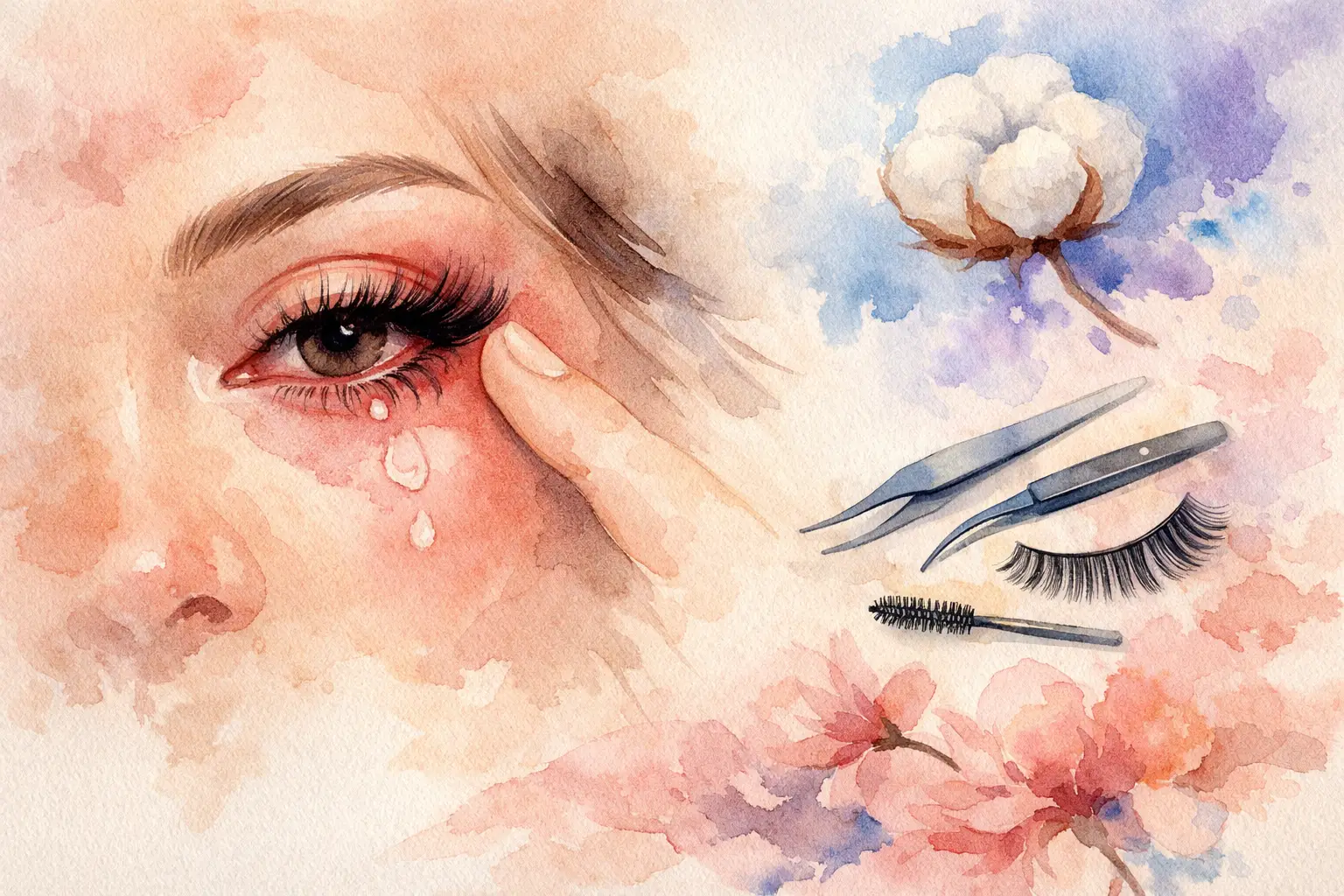
Common lash extension allergy symptoms include itchy eyelids, redness around the lash line, puffiness or swelling of the eyelids, watery eyes, a burning sensation, dry or flaky skin, and tenderness around the eyes. In some cases, the eyelids can swell enough that opening the eyes comfortably becomes difficult.
Allergic contact dermatitis can also cause a rash-like appearance on the upper or lower eyelids. Because the skin around the eyes is thin and delicate, even a small reaction may look dramatic. The reaction often affects both eyes, although one eye can appear worse depending on how the product contacted the skin.
An allergy does not mean that the extensions were applied poorly or that your lash artist used low-quality products. Allergies can develop after repeated exposure, which means someone may wear extensions for months or years without trouble and then react unexpectedly.
Allergy vs. Irritation: The Difference Matters
Not every uncomfortable feeling after a lash appointment is an allergy. Adhesive fumes can cause temporary irritation, particularly if the eyes open during the service, the eyes water, or the client is sensitive to vapors. This may cause stinging, tearing, or red eyes immediately after the appointment.
Irritation tends to improve within a few hours or by the next day. A true allergy is more likely to worsen over time and often includes itching, lid swelling, or skin changes. It may also return with future adhesive exposure.
Dry eyes, seasonal allergies, contact lenses, lack of sleep, and rubbing your eyes can make irritation feel worse. That is why a trained lash professional should ask about your symptoms rather than assuming every case of redness is the same.
There is one more concern to keep in mind: infection. Thick yellow or green discharge, significant pain, crusting, increasing warmth, vision changes, or a red, painful bump near the lash line are not typical allergy symptoms. These can signal an eye infection or another medical issue and deserve prompt evaluation by a healthcare professional.
A Simple Timing Clue
Timing can offer a useful clue, but it is not a diagnosis. Burning or watery eyes during or immediately after an appointment often point to irritation. Itching and swollen lids that begin later and continue to worsen are more consistent with an allergic response.
Either way, your comfort comes first. Do not try to push through symptoms because you want to keep your new set. Eye-area reactions are not something to ignore.
What to Do If You Think You Are Having a Reaction
If you notice mild discomfort, stop using eye makeup, lash shampoo, cleansing balms, or any new skincare product around your eyes until you understand what is causing the problem. Do not rub, tug, or pick at the extensions. Pulling them can damage your natural lashes and further irritate already-sensitive eyelid skin.
Contact your lash artist as soon as possible and clearly explain when the symptoms started, whether both eyes are affected, and whether you have swelling, itching, pain, discharge, or vision changes. A reputable professional will take your concerns seriously and help you determine whether a professional removal is appropriate.
If an allergy is suspected, having the extensions professionally removed is often the safest next step. Removal should be performed carefully with products designed for lash adhesive, not with oil, steam, tweezers, or at-home remedies. Trying to dissolve adhesive yourself near your eyes can create a bigger problem.
A cool compress may feel soothing for mild puffiness, but avoid placing anything directly on the lashes that could interfere with the adhesive or introduce bacteria. For medication guidance, including antihistamines or topical treatments, speak with a pharmacist, urgent care provider, eye doctor, or your personal healthcare provider. Products that are safe for one skin reaction may not be appropriate for use close to the eyes.
Seek urgent medical care right away if you have severe swelling, eye pain, trouble seeing, light sensitivity, facial swelling, hives beyond the eye area, trouble breathing, or difficulty swallowing. Call 911 for symptoms of a severe allergic reaction, especially breathing problems or swelling of the lips, tongue, or throat.
Why Allergies Can Happen Even With Premium Products
Professional-grade products and careful application reduce unnecessary risk, but no adhesive can be guaranteed allergy-free for every person. Lash adhesive must create a durable bond, and that requires active ingredients. A person who becomes sensitized to an ingredient may react again after future exposure.
The amount of exposure can also matter. An experienced lash artist uses proper isolation, controls adhesive placement, follows sanitation practices, and prevents adhesive from touching the eyelid skin. These steps support a more comfortable service, but they cannot eliminate a true ingredient allergy.
It is also worth knowing that a patch test is not a perfect predictor. A patch test may identify some sensitivities, but a negative result does not guarantee that you will not react during a full application. Reactions can be delayed, and the eyelid area responds differently than skin elsewhere on the body.
If you have reacted before, be honest with your lash artist before booking another service. Do not assume a different adhesive color, a low-fume formula, or a shorter appointment will solve the issue. Some clients may be able to explore alternatives with guidance from a qualified professional and their healthcare provider, while others may need to avoid lash extensions altogether.
How to Lower Your Risk Before Your Appointment
The best prevention begins with a detailed consultation. Let your lash artist know if you have sensitive eyes, eczema, contact dermatitis, chronic dry eye, seasonal allergies, recent eye surgery, or a past reaction to lash adhesive, tape, gel pads, or cosmetics. Share any changes in medication or skincare that may affect your skin sensitivity.
Choose a licensed, properly trained lash professional who prioritizes sanitation, product knowledge, and individualized service. Your appointment should never feel rushed. A careful artist assesses your natural lashes, uses clean tools, protects the lower lashes properly, and makes sure you can keep your eyes comfortably closed throughout the application.
After your service, follow the aftercare instructions you receive. Keep your lashes clean, avoid rubbing your eyes, and do not apply unknown products near the lash line. Good aftercare protects retention, but more importantly, it helps you notice changes in your eye area early.
For lash artists, documenting product use and client-reported reactions is part of professional care. Education matters because the right response is not simply offering a refill or recommending a stronger cleanser. It is listening, recognizing possible warning signs, and referring the client for medical care when needed.
When It Is Safe to Book Again
Do not book a refill while your eyes are still irritated, swollen, itchy, or healing. Adding more extensions or exposing the area to adhesive can intensify the reaction. Wait until symptoms have fully resolved and you have received medical guidance if your reaction was moderate, severe, recurrent, or unclear.
A future appointment depends on what caused the symptoms. If the issue was temporary fume irritation, changes such as improved eye closure, adjusted humidity, or different under-eye pads may help. If it was a confirmed or strongly suspected adhesive allergy, another adhesive exposure may not be a good choice.
Your eyes deserve the same thoughtful care as your lashes. If something feels wrong after an appointment, speak up early, seek professional removal when appropriate, and give your eyelids time to recover before making your next beauty decision.