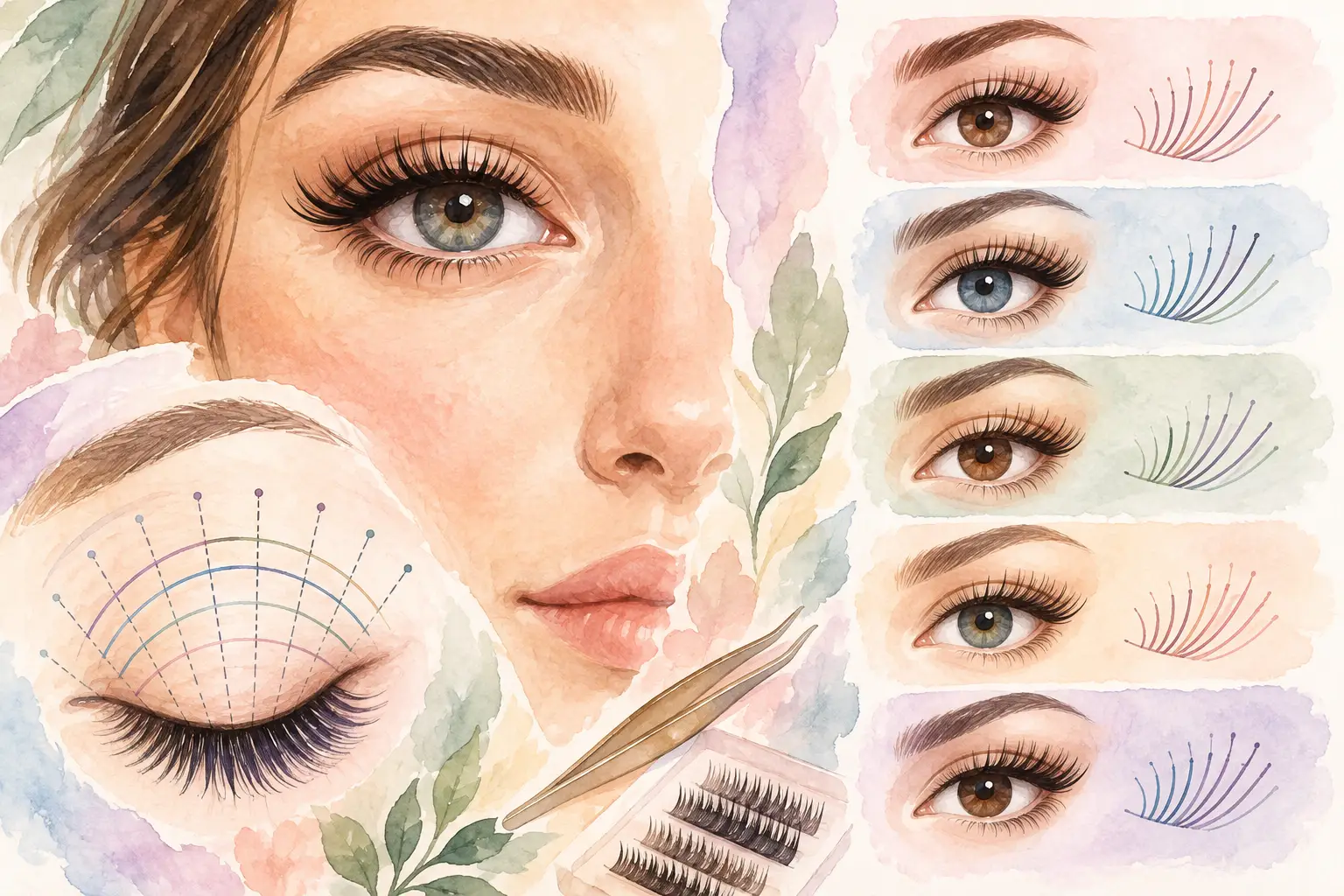
A wispy cat-eye set can look lifted and glamorous on one client, then make another client’s eyes appear heavier or more downturned. The difference is not the quality of the lashes. It is the map. Lash mapping for eye shapes gives every set a purpose, helping your artist place length, curl, and density where they support your natural features instead of competing with them.
At Lash Therapy Indy, every lash appointment begins with an individualized assessment because no two eye areas, lid spaces, or natural lash lines are exactly alike. The goal is never to force a trend. It is to create a polished, comfortable result that feels made for you.
What Lash Mapping Actually Does
A lash map is the design plan for an extension set. It tells the artist where shorter and longer lengths will sit across the lash line, how the curls will change, and where fullness should be concentrated. Think of it as the blueprint behind a classic, hybrid, volume, wispy, doll-eye, or cat-eye finish.
Eye shape is a major part of that blueprint, but it is not the only factor. Your artist also considers your natural lash strength, the amount of lid space visible when your eyes are open, whether your eyes sit close together or wide apart, your brow bone, and how dramatic you want to look each day. A map that photographs beautifully is not always the right map for a client who wants low-maintenance, natural-looking lashes for work, school runs, and busy mornings.
A skilled artist also protects lash health. Longer is not automatically better. Extensions must be chosen at a safe weight and length for your natural lashes, especially with volume fans. Premium results should feel light, look balanced, and allow your natural lash cycle to continue normally.
Lash Mapping for Eye Shapes: Start With an Assessment
Most eyes do not fit perfectly into one category. You may have almond-shaped eyes with slightly hooded lids, round eyes that are close-set, or downturned outer corners with a lifted brow shape. That is why an in-person consultation matters more than choosing a style from one photo online.
During an assessment, your lash artist looks at your eyes while they are relaxed and open. This is essential. A map drawn with the eye closed can look very different once the lid folds, brow bone, and outer corner position come into view. Your artist should also ask whether you wear glasses, sleep on your side, use oil-based makeup products, or have sensitivities that may affect retention and comfort.
The best map supports what you love about your eyes while softening features you may want to balance. It should still look beautiful from the front, at an angle, and in your everyday lighting, not only under a ring light.
Maps That Work Well for Common Eye Shapes
Almond Eyes
Almond eyes are balanced, slightly tapered at the inner and outer corners, and versatile enough for many styling options. A soft cat-eye, squirrel map, doll-eye, or textured wispy set can all work beautifully depending on the desired result.
For a natural enhancement, gradual lengths that peak just past the center of the eye create an elegant, open look. For clients who want more drama, carefully placed spikes and fuller volume can add definition without overwhelming the eye. The trade-off is that a very long outer corner can pull an almond eye downward if the outer corners naturally sit low, so the map should be adjusted rather than copied.
Round Eyes
Round eyes often show more visible white above or below the iris, creating a bright, open appearance. Many clients with round eyes want a slightly elongated shape rather than more roundness. A modified cat-eye or squirrel map usually helps by moving the longest lengths away from the exact center.
The longest extensions are often placed around the outer third of the eye, then tapered gently at the far outer corner. This creates a more elongated, sultry effect while keeping the set balanced. A strong doll-eye map with the longest lengths directly in the center can make round eyes appear even rounder, although it can be a beautiful choice if a wide-eyed, youthful effect is exactly what the client wants.
Hooded Eyes
With hooded eyes, a fold of skin can cover part of the mobile lid when the eyes are open. Lashes can make a remarkable difference here, but the curl selection matters as much as the map. A stronger curl can help bring the extensions into view and create the appearance of more openness.
For many hooded eyes, a gentle peak near the center or just beyond it works well. Extremely long outer corners may disappear into the lid fold or look droopy from the front. Instead, the artist may use a kitten or squirrel-inspired map, building length gradually and dropping it slightly before the final outer corner. This gives lift without placing unnecessary weight where the lid can hide it.
Monolid Eyes
Monolid eyes have little to no visible crease, and they often benefit from maps that add height and definition without becoming too heavy. Curl selection is especially important because a soft curl may not be visible enough once the eye is open.
A doll-eye or open-eye map can create a bright, lifted effect, particularly when paired with a curl selected for the client’s natural lash direction. Length should remain controlled. Excessive length can tip forward instead of up, which reduces the lift the map is meant to create. Textured spikes can be added for dimension, but they should complement the eye rather than create a top-heavy lash line.
Downturned Eyes
Downturned eyes have outer corners that angle slightly downward. The wrong cat-eye map can exaggerate that direction, especially if the longest lashes sit at the last few sections of the lash line. A lifted map is typically a more flattering choice.
A squirrel map or a modified cat-eye places the peak before the outermost corner, then tapers the lashes down. This visual shift draws the eye upward and outward. A curl with visible lift can add even more support, but it must be applied safely and cleanly to the natural lash.
Upturned Eyes
Upturned eyes naturally lift at the outer corners and can carry a cat-eye style well. A gradual increase in length toward the outer third often enhances their natural shape without making the set look uneven.
Because the outer corners already rise, some clients may prefer a softer map that keeps the eyes balanced rather than intensely winged. A kitten eye, a subtle cat-eye, or a textured hybrid set can provide definition while preserving that naturally lifted look. The right choice depends on whether the client wants understated everyday glam or a more noticeable statement lash.
Close-Set and Wide-Set Eyes
Spacing affects a map just as much as the eye outline. For close-set eyes, placing the longest lengths slightly farther toward the outer third can create the impression of more space between the eyes. Keeping the inner corners delicate is also key, since heavy inner-corner extensions can feel uncomfortable and visually crowded.
For wide-set eyes, a gentle center-focused or doll-eye map can bring attention inward and create a more balanced appearance. The goal is not to change your features. It is to use lash placement thoughtfully so the finished set feels harmonious.
Curl, Density, and Texture Change the Result
A map is only one piece of the final design. A soft C curl creates a natural finish, while CC, D, and stronger curls provide more visible lift. The ideal curl depends on your natural lash direction, eyelid structure, and desired style. Using an overly dramatic curl simply because it looks bold can affect attachment and retention if it is not suited to the natural lash.
Density matters, too. A classic set can define the eyes with a clean, mascara-like effect. Hybrid lashes add texture and a little extra fullness, while volume lashes create a fluffier, more glamorous lash line. A fuller set does not require longer lengths. In fact, moderate lengths with well-designed volume often look more luxurious, photograph better, and remain more comfortable than oversized extensions.
Wispy details should be intentional. A few strategically placed spikes can lift the center, enhance an outer corner, or add a soft, airy finish. Too many spikes, or spikes that are too long for the map, can make the set look disconnected. The artistry is in keeping every detail cohesive.
Bring Inspiration, Then Trust the Customization
Reference photos are helpful because they show your preferred level of fullness, texture, and drama. Still, the same map can look completely different across two clients. The model in a photo may have a different lid shape, lash direction, eye spacing, or natural lash density than you do.
Tell your artist what you want your lashes to do for you. Maybe you want to look more awake without eyeliner, make your eyes appear longer, keep your routine simple, or have full glam that lasts through special events. Those goals give your artist better direction than requesting a style name alone.
A beautiful lash set is not about following one rule for every face. It is about thoughtful placement, safe application, premium products, and an artist who sees the details. When your lash map is built around your eyes, the result should feel effortless every time you look in the mirror.