A beginner lash kit can look exciting on a supply shelf, but more products do not automatically create better lash sets. The right top lash supplies for beginners are the ones that support clean application, consistent isolation, client comfort, and controlled practice. Start with reliable essentials, learn how each one performs, and add specialty items once your fundamentals are strong.
For aspiring lash artists, product choices are not just about appearance. Your adhesive, tweezers, lashes, and sanitation routine all affect retention, safety, and the experience your client has in your chair. A thoughtfully built kit helps you practice with purpose instead of working around tools that make the job harder.
Top Lash Supplies for Beginners: Your Core Kit
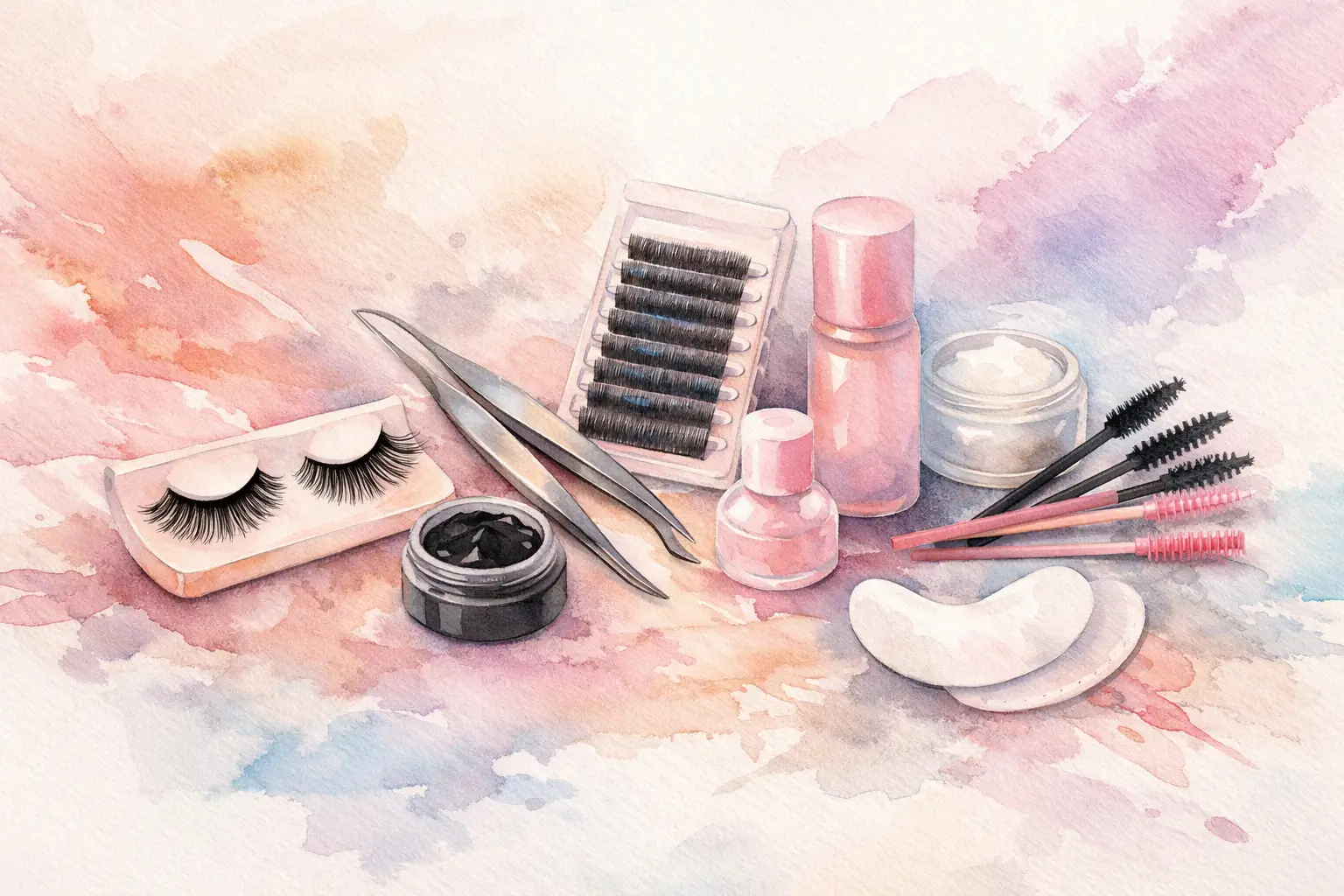
A professional starter kit should cover the full appointment process: preparing the natural lashes, isolating and applying extensions, checking the finished set, and cleaning your workspace properly afterward. You do not need every curl, diameter, or trendy accessory on day one. You do need supplies you can trust and replace consistently.
Lash Extensions in Practical Lengths and Curls
Begin with quality individual lash trays in a limited selection of dependable styles. For classic application, a mixed tray of .15 mm lashes is a practical place to start. As you move into volume work, lighter diameters such as .07 mm become essential because multiple extensions are used to create each fan.
A C curl is often beginner-friendly because it creates a polished, noticeable lift that suits many eye shapes. A CC curl may offer more drama, while a J curl is more subtle. Avoid stocking every option immediately. Practice on a few core curls and lengths first, usually in the 8 mm to 14 mm range, so you can learn weight balance, styling, and placement without overwhelming your workspace.
Lash quality matters. Extensions should have a consistent curl, a clean tapered finish, and strips that release easily without bending or losing shape. Cheap lashes can make fan creation frustrating and may leave a set looking uneven. Premium materials help you focus on technique rather than fighting your supplies.
A Reliable Lash Adhesive
Lash adhesive is one of the most important purchases in your kit, and it is not a one-size-fits-all product. The best adhesive for you depends on your application speed, room temperature, humidity, and experience level. Fast-drying glue can be excellent for a seasoned artist, but it may cure before a beginner has placed the extension correctly.
Choose an adhesive with a workable dry time while you are learning. Store it as directed, replace it on schedule, and never use a bottle that has become stringy, separated, or past its recommended use period. Keep the nozzle clean, shake the adhesive before use, and dispense a fresh drop regularly during an appointment.
Adhesive should only be used with proper education and professional protocols. A patch test, detailed consultation, and clear aftercare guidance help protect both your client and your business. If you are not yet trained, focus on mannequins or practice strips until you have completed a reputable certification program.
Isolation and Volume Tweezers
A quality pair of tweezers gives you control, but the “best” shape depends on the technique you are performing. Start with one precision isolation tweezer and one application tweezer. Straight or curved isolation tweezers can help separate each natural lash clearly, while a boot-shaped or angled tweezer is commonly used for classic placement and volume fan work.
The key is a comfortable grip and dependable tension. Tweezers that are too stiff can tire your hand. Tweezers with poor alignment can make it difficult to pick up a single lash or hold a fan securely. Test your tweezers before using them on a client, and always keep a backup pair available.
Treat tweezers as reusable professional tools. They must be cleaned and disinfected according to appropriate sanitation procedures between clients, stored safely, and checked for damage. If a tip is bent or no longer aligns, replace it rather than trying to force it to work.
Under-Eye Pads and Lash Tape
Under-eye pads protect lower lashes and create a comfortable work surface beneath the eye. Look for pads that stay in place without pulling delicate skin. Gel pads are popular, but every client’s skin is different, so keep gentle lash tape available for adjusting edges or securing lower lashes when needed.
Application matters as much as the product. Pads should not sit too close to the waterline, press into the eye, or cause discomfort. Ask your client how they feel before beginning, and make adjustments immediately. Comfortable clients are more likely to relax, and relaxed clients are easier to lash safely and precisely.
Prep, Cleansing, and Retention Products
Beautiful retention starts before the first extension is applied. A professional lash cleanser or makeup remover formulated for lash extensions helps remove makeup, oil, and residue from the natural lashes. Oil-free does not always mean lash-safe, so select products designed for the lash service you are providing.
Depending on your training and client’s natural lashes, you may also use a primer or other prep product. These products can support adhesion, but they are not a substitute for thorough cleansing or correct application. Use them sparingly and according to the manufacturer’s instructions. Too much product can create its own retention issues.
A compatible sealant may be useful as part of an aftercare plan, particularly for clients who need extra support protecting their investment. The right product should complement your adhesive system, not promise unrealistic retention. Healthy natural lashes, proper cleansing, and timely fills remain the foundation of long-lasting results.
Sanitation Supplies Are Not Optional
A polished lash cart means very little if sanitation is an afterthought. Your kit should include hand sanitizer, disposable mascara wands, micro brushes, lip applicators, cleansing wipes, disinfectant appropriate for your tools and surfaces, and a covered container for cleaned implements. Keep clean and used tools separate at all times.
Disposable items should never be reused from one client to another. That includes spoolies, micro brushes, eye pads, adhesive rings, and any applicator that touches the client or product during a service. Prepare your station before the appointment so you are not searching through drawers with gloved hands.
Good sanitation is visible professionalism. Clients notice when their artist washes hands, opens fresh disposables, cleans the workspace, and explains what is being used around their eyes. Those details build trust, especially for first-time extension clients.
Small Tools That Improve Your Application
A few supporting tools make a noticeable difference in a beginner’s workflow. A lash tile or palette keeps lengths organized and within reach. A jade stone, adhesive pallet, or disposable glue tray provides a clean surface for adhesive. A fan or nano mister may be used only as directed within your adhesive system and training protocols.
Lighting is also a supply decision, even though it is often overlooked. Choose bright, even lighting that lets you see individual natural lashes without straining your eyes. A supportive lash bed, adjustable chair, and correct posture protect your body during longer appointments. You can improve your technique faster when you are not working in shadows or discomfort.
A mirror is another simple but valuable tool. Use it to check symmetry, direction, and lash line cleanliness before your client opens their eyes. A quick final inspection can catch crossed lashes, visible adhesive, or styling imbalances that are easier to correct before the appointment ends.
What Beginners Should Wait to Buy
It is tempting to purchase every new product in the lash industry, especially when social media makes advanced techniques look effortless. Hold off on large quantities of specialty curls, colored lashes, premade fans, multiple adhesive formulas, and expensive accessories until you know how they fit your service menu.
Premade fans can be a useful option for certain artists and clients, but they do not replace an understanding of weight, isolation, attachment, and safe styling. Likewise, a faster adhesive will not correct inconsistent placement. Invest in education and controlled practice before expanding your kit.
The same principle applies to purchasing in bulk. Adhesive and prep products have shelf-life considerations, while lash trays can sit unused if you stock styles your clients do not request. Buy enough to work confidently, track what you use, and restock based on real demand.
Build Skill Before You Build Inventory
Your supplies should support your education, not distract from it. Practice clean isolation, proper adhesive control, directional placement, and safe lash mapping repeatedly. Take photos of your work, review where lash lines look sparse or uneven, and learn why retention concerns happen rather than simply switching products.
At Lash Therapy Indy, state-certified training is designed to help aspiring artists understand these fundamentals alongside professional product use, sanitation, and client care. The goal is not just to create a full set, but to create one safely, comfortably, and with results a client is excited to wear.
Start with supplies that make careful work possible, then let your skill guide the next purchase. A smaller, well-maintained kit and a commitment to proper technique will take you further than a crowded cart ever will.