A beautiful lash set should feel comfortable from the moment you leave the studio. If you have sensitive skin, seasonal allergies, or a history of reacting to beauty products, knowing how to patch test lash adhesive can help you make a more confident decision before your appointment.
A patch test is a precaution, not a promise. It may identify an obvious sensitivity before a full set is applied, but it cannot guarantee that a reaction will never happen. Lash adhesive reactions can develop after repeated exposure, and every client’s history, health, and skin condition is different. That is why a professional consultation and clean application practices matter just as much as the test itself.
What a Lash Adhesive Patch Test Can Tell You
Professional lash adhesives are typically cyanoacrylate-based. This is the ingredient that allows the extension to bond securely to the natural lash. Some formulas also contain pigments, stabilizers, or other ingredients that can bother a client who is sensitive to them.
A patch test is meant to look for signs of irritation or sensitivity after limited exposure to the adhesive. It is especially helpful for first-time extension clients, clients changing to a new adhesive formula, or anyone who has had an uncertain reaction to a previous lash service.
Still, the results have limits. A person can have a negative patch test and later react to a full application because the appointment involves more adhesive, more fumes, longer exposure, and a different environment around the eyes. A person can also experience irritation from under-eye pads, tape, cleanser, lash shampoo, or improper aftercare rather than the adhesive itself.
The goal is not to treat a patch test as a green light for every situation. The goal is to gather useful information and choose the safest next step.
How to Patch Test Lash Adhesive With a Professional
For lash extensions, the safest approach is to have a licensed or properly trained lash artist perform the test according to the adhesive manufacturer’s directions and the studio’s sanitation procedures. Do not try to place a drop of lash extension glue directly onto your eyelid, lash line, or bare skin at home. Professional-grade extension adhesive is not the same as strip-lash glue, and it should never be used casually.
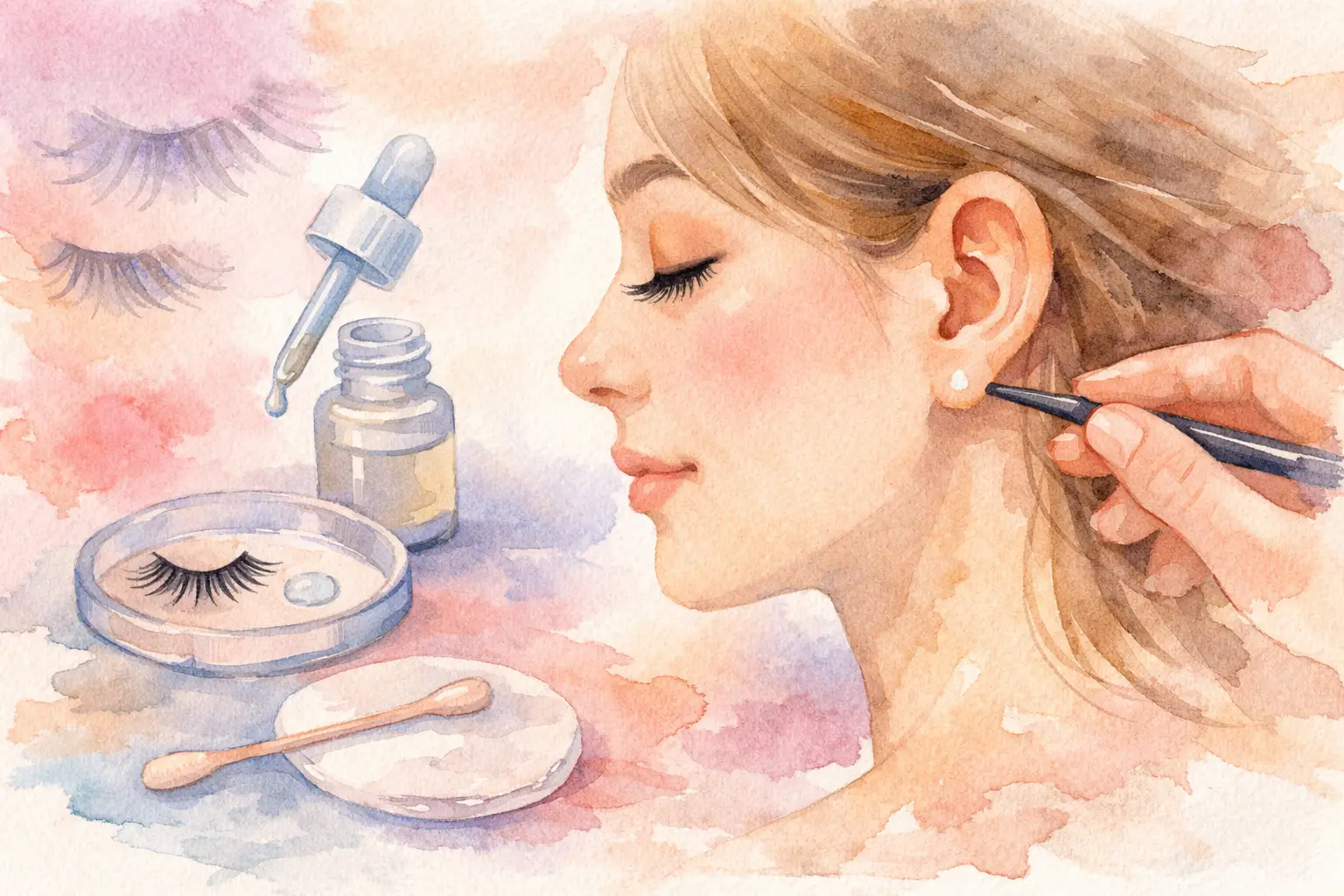
A professional may complete the test by applying a very small number of extensions, often at the outer corners of the natural lashes, using the same products planned for your service. This creates limited, realistic exposure without committing to a full set. Your artist should use clean tools, isolate the natural lashes carefully, and keep adhesive away from the skin.
After the test, wait at least 24 to 48 hours before moving forward with a full appointment. Some sensitivities appear quickly, while others take longer to become noticeable. If your appointment schedule is tight, plan the patch test several days ahead rather than squeezing it in the evening before your full set.
A responsible artist will also ask questions before the test. Share any past reactions to lash extensions, hair color, acrylic nails, medical tape, skincare products, or cosmetics. Mention current eye irritation, recent eye procedures, prescription eye drops, pregnancy-related sensitivities, and active allergies. More information helps your artist make a better recommendation.
What a Comfortable Result Looks Like
A normal result means the eye area remains comfortable during the waiting period. There should be no increasing itchiness, swelling, burning, tenderness, redness, watery eyes, rash, or unusual tightness around the lashes.
Mild awareness right after an appointment can happen if someone is not used to lying with their eyes closed or wearing under-eye pads. But discomfort should not linger, worsen, or turn into visible irritation. If something feels off, take it seriously rather than assuming it will settle on its own.
Signs You Should Not Ignore
Do not proceed with a full set if you notice itching, redness, puffy eyelids, burning, rash-like bumps, watery eyes, or swelling around the test area. Remove the extensions only with professional guidance when possible. Pulling, rubbing, or using oil-based products aggressively can damage natural lashes and further irritate the skin.
If you have significant swelling, trouble breathing, facial swelling beyond the eye area, hives, severe pain, or vision changes, seek urgent medical care. For less severe but persistent symptoms, contact a qualified medical provider or eye care professional. A lash artist can recognize common service-related concerns, but they cannot diagnose an allergy or prescribe treatment.
Why Reactions Can Happen Even After a Negative Test
This is the part many clients do not hear often enough: a clear patch test does not eliminate all risk. Adhesive sensitivity is sometimes cumulative. You may wear extensions comfortably for months or years and then develop a reaction after repeat exposure.
The full-set environment also differs from a small test. A complete service uses more lashes and adhesive, takes longer, and may create more exposure to adhesive fumes while the bond cures. Humidity, room temperature, adhesive age, and application technique all affect curing behavior and client comfort.
That does not mean lash extensions are automatically unsafe. It means a premium service should be personalized. Your artist should choose products suited to the service, maintain a clean workspace, control the application environment, and protect the eye area with careful isolation. Client comfort should never be treated as an afterthought.
When to Skip the Patch Test and the Appointment
There are situations when a patch test is not the right next move. If you have previously had a clear allergic reaction to lash extension adhesive, re-exposure may cause another reaction and could be more severe. Do not assume a different brand, clear adhesive, or “sensitive” formula will solve the issue without speaking with a medical professional.
It is also wise to postpone when you have an eye infection, pink eye symptoms, a stye, unexplained redness, broken skin around the eyes, or an active eczema flare near the lash line. Extensions should be applied to healthy, clean natural lashes and a comfortable eye area.
Recent eye surgery or medical procedures require extra caution. Follow your provider’s guidance before booking any eye-area beauty service. If you are using a new prescription eye medication, bring that up during your consultation as well.
Help Your Artist Give You the Safest Recommendation
A successful patch test starts before adhesive is opened. Arrive with clean lashes free of mascara, eyeliner, oils, and eye cream. Avoid applying new skincare products around the eyes in the days leading up to your test, since a separate product reaction can make the results hard to interpret.
Be direct about your history. Tell your artist if you have had red, swollen, itchy, or watery eyes after a previous extension service, even if the symptoms went away quickly. Mention if you removed your own extensions, used a new lash cleanser, or changed medications around the same time. Those details can help separate a possible adhesive concern from irritation caused by another factor.
If you move forward after a comfortable test, follow aftercare closely. Keep the lashes clean, avoid rubbing the eyes, and do not pick at extensions. Proper cleansing supports lash health and helps prevent buildup that can cause discomfort unrelated to adhesive sensitivity.
A Better Lash Experience Starts With Honest Consultation
Patch testing is one part of thoughtful lash care, not a shortcut around a thorough consultation. At Lash Therapy Indy, client comfort, sanitation, and customized artistry are central to creating polished lashes that feel as good as they look. A trained artist can help you decide whether a patch test, a postponed appointment, or an alternative beauty service is the best fit for your needs.
Trust what your eyes and skin are telling you. Taking an extra day to test, ask questions, or reschedule is always worth more than pushing through discomfort for a lash appointment.