A fresh adhesive can be the difference between a beautiful set that retains well and a client who returns frustrated after a few days. Professional lash glue storage is not an optional detail behind the lash bed. It is part of the service standard, right alongside proper isolation, sanitation, styling, and aftercare education.
For lash artists, adhesive is one of the most sensitive products in the room. Heat, humidity, air exposure, contamination, and inconsistent handling can change how it performs. When your glue is protected correctly, you can work with more consistency, support stronger retention, and give every client the premium care they expect.
Why Professional Lash Glue Storage Matters
Lash extension adhesive is typically formulated with cyanoacrylate, an ingredient that begins curing when it meets moisture in the air. That reaction is exactly what helps an extension attach to the natural lash. But it also means adhesive can begin to degrade when it is exposed to humidity, frequent temperature changes, or air entering the bottle.
Poorly stored glue may thicken, cure too quickly, cure too slowly, become stringy, or develop a weak bond. A lash artist may assume their technique is the issue when the real concern is the adhesive condition. Before changing your placement, isolation, or styling process, look closely at where and how your glue is stored.
Proper storage also protects your investment. Professional adhesive is a working product with a limited shelf life. Treating it with care helps reduce unnecessary waste and keeps your service setup organized, clean, and client-ready.
The Best Environment for Lash Adhesive
A lash adhesive performs best when it is stored in a cool, dry, stable environment away from direct sunlight. The goal is not to make the glue cold at all costs. The goal is to prevent dramatic swings in temperature and moisture that can affect the formula.
A closed cabinet, drawer, or dedicated storage container is often a smarter choice than leaving adhesive on an open cart near a window, steamer, sink, or treatment bed. Avoid storing it in bathrooms, laundry areas, or other spaces with changing humidity. Even a beautiful studio can have problem areas if it receives afternoon sun or sits near a heating vent.
Most artists benefit from keeping a small hygrometer in their workspace and storage area. This gives you a clear reading of humidity and temperature instead of relying on guesswork. Your adhesive storage conditions and your lashing conditions are related, but they are not exactly the same. The room conditions affect how the glue behaves during an appointment, while storage conditions affect how well the bottle stays fresh between appointments.
Keep the Bottle Upright and Sealed
Store each adhesive bottle upright with the cap tightly secured. Keeping it vertical helps prevent adhesive from settling into the cap or nozzle, where it can harden and make the bottle difficult to use.
After dispensing a drop, wipe the nozzle carefully with a clean, lint-free material before replacing the cap. Never use a product that leaves fibers behind, since fibers can enter the nozzle or adhesive. Close the cap promptly. Every minute a bottle sits open invites more moisture exposure.
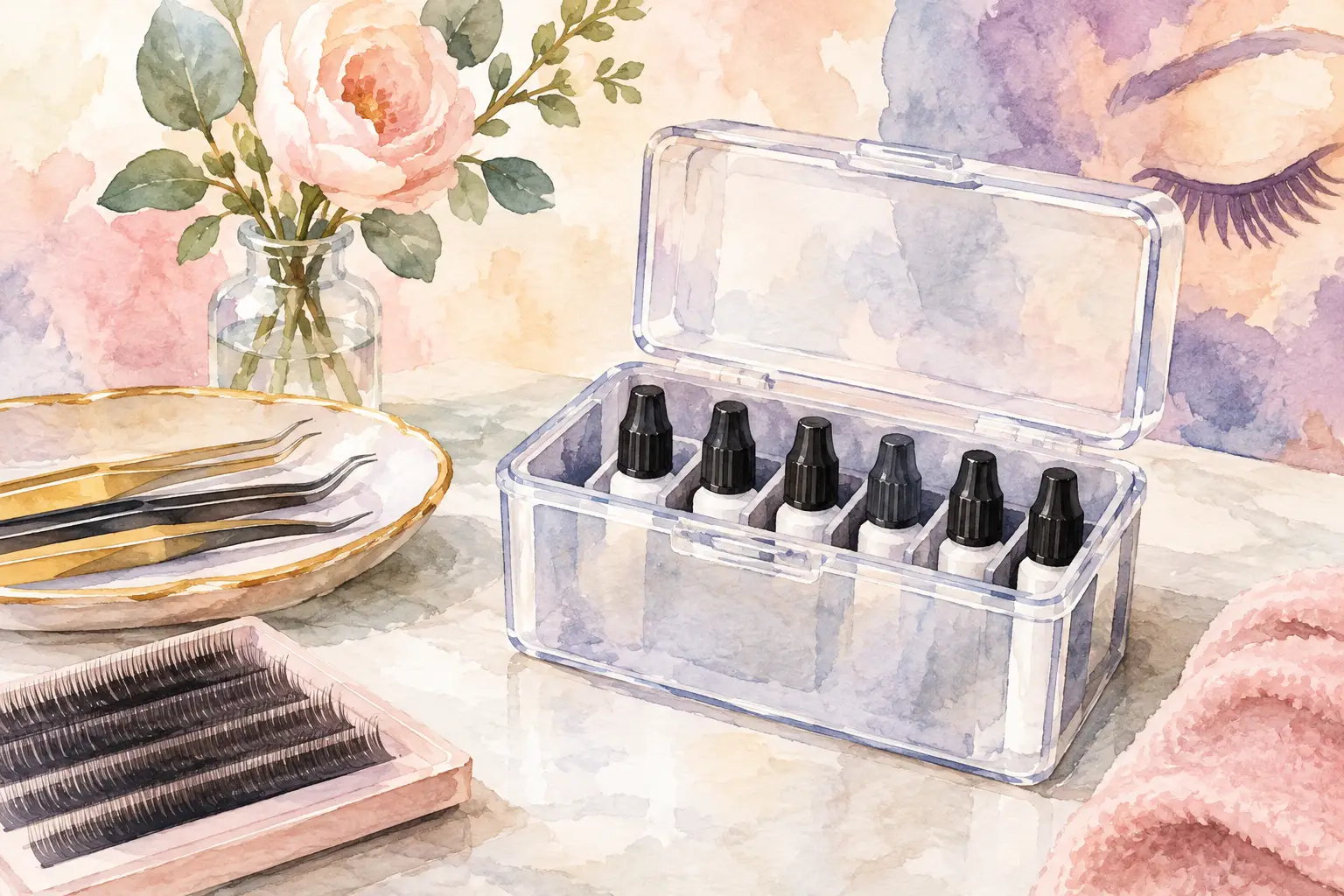
It is also wise to avoid storing bottles loosely in a drawer where they can roll, tip, or come into contact with other products. A dedicated adhesive holder or small storage container keeps your station more polished and helps prevent spills.
Use an Airtight Container With Desiccant Packs
An airtight adhesive container with fresh desiccant packs is one of the most practical tools a working lash artist can keep in their kit. The container provides an extra layer of protection from ambient moisture, while desiccant packs help control humidity inside the container.
This setup is especially helpful in Indiana, where seasonal weather can shift quickly. Summer humidity and winter indoor heat can both create conditions that make adhesive care more complicated. A reliable storage container gives you more consistency even when the weather outside is doing something different every week.
Check the desiccant packs regularly and replace them as directed. If your packs change color when saturated, do not ignore that signal. A moisture-control container only works when the moisture-control materials are still active.
Keep the container clean, dry, and reserved for adhesive and related tools. Do not place wet wipes, damp sponges, or used applicators inside. Storage should protect the product, not introduce new contamination.
Should Lash Glue Be Refrigerated?
Refrigeration depends on the adhesive manufacturer’s instructions and whether the bottle has been opened. Some manufacturers recommend refrigerating unopened adhesive to extend shelf life before use. Others provide storage guidance that does not require refrigeration. Always follow the directions for your specific product first.
If an unopened adhesive is stored in a refrigerator according to manufacturer guidance, keep it sealed inside an airtight bag or container. Before opening it, allow the bottle to return fully to room temperature while it remains sealed. Opening a cold bottle too soon can create condensation, and moisture is the enemy of fresh cyanoacrylate adhesive.
For opened bottles, a cool, dry, airtight storage container is usually the better choice unless the manufacturer specifically states otherwise. Moving an opened bottle in and out of the refrigerator can introduce temperature changes and condensation that shorten its usable life.
The practical rule is simple: consistency wins. Do not refrigerate adhesive simply because it sounds more protective. Use the storage method recommended by the manufacturer, then follow it carefully every time.
Create a Simple Adhesive Rotation System
The best storage habits are easy to repeat during a busy day. Label each adhesive bottle with the date it was opened and the expiration date listed by the manufacturer. This prevents an older bottle from getting pushed to the back of the drawer and used long after its ideal performance window.
Many professional adhesives are best replaced within several weeks after opening, even if there is product left in the bottle. The exact timeline varies by formula, usage frequency, and brand instructions. A bottle used daily in a high-volume studio may need to be replaced sooner than one used occasionally. Do not judge adhesive freshness by how much product remains.
A dependable rotation process includes four habits:
- Date the bottle the moment it is opened.
- Store it upright in a cool, dry airtight container.
- Clean the nozzle and close the cap after every use.
- Retire the adhesive when it reaches the manufacturer’s recommended replacement date or shows signs of decline.
This small system saves time during appointments and supports better decision-making when retention concerns arise.
Signs Your Adhesive May No Longer Perform Well
Even perfectly stored glue will eventually reach the end of its working life. Watch for changes in texture, consistency, fumes, drying behavior, or retention. Adhesive that becomes unusually thick, clumpy, stringy, oily-looking, or difficult to dispense should not be used on clients.
You may also notice that your normal technique suddenly produces slow bonding or poor retention across multiple clients. Before assuming every client’s aftercare is the problem, check your adhesive age, room humidity, temperature, and storage process. A fresh bottle may be the professional solution.
Never try to revive old adhesive by adding water, primer, bonder, or any other product directly into the bottle. This can alter the formula and create unpredictable results. When in doubt, replace it. The cost of a new adhesive is far less than the cost of compromised retention and disappointed clients.
Clean Storage Supports a Clean Service
Professional storage is also a sanitation habit. Keep adhesive away from makeup remover, liquids, open beverages, and areas where dust or residue can collect. Do not return used items to your storage container, and do not allow clients to handle open adhesive bottles.
Your clients may never see the inside of your adhesive drawer, but they experience the results of your standards. Organized storage communicates the same care as a clean lash bed, disinfected tools, and a thoughtful consultation. It helps you work calmly, efficiently, and confidently.
At Lash Therapy Indy, premium lash artistry begins with the details clients can feel in every appointment. Give your adhesive the same level of care you give your application technique, and you will build a cleaner routine, more consistent retention, and a service experience worth returning for.