Clean lashes last longer. That is the simplest answer to how to clean lash extensions, and it is also the step many clients skip because they are afraid they will ruin their set. In reality, the opposite is usually true. When extensions are not cleaned properly, oil, makeup, dead skin, and daily buildup collect along the lash line. That buildup can affect retention, make lashes look clumpy, and create an unhealthy environment for your natural lashes.
If you wear extensions for everyday ease, polished glam, or a fuller look without mascara, proper cleansing needs to be part of your routine. It does not have to be complicated. It just needs to be gentle, consistent, and done with the right products.
Why clean lash extensions matters
A lot of people assume eyelash extensions should be touched as little as possible. That sounds careful, but it often leads to poor aftercare. Your lash line naturally produces oils, and if you wear makeup, skincare, or SPF, even more residue can settle around the base of the extensions throughout the day.
When that residue stays in place, lashes can start to look closed up instead of soft and fluffy. You may also notice irritation, itching, or a heavier feeling around the eyes. For clients investing in premium lash services, cleaning is not an extra step. It is part of protecting the look you paid for.
There is also a retention piece to this. A clean lash line helps extensions stay separated and balanced. Dirty lashes can stick together, twist, or shed unevenly. If your fills never seem to last, aftercare may be part of the issue.
How to clean lash extensions safely at home
The best method is simple and gentle. You do not need to scrub, soak, or overwork the eye area.
Start with clean hands. Before you touch your lashes, wash your hands thoroughly. This helps prevent transferring oil, dirt, or bacteria directly to the lash line.
Next, use a lash-safe cleanser. A cleanser made for eyelash extensions is your best option because it is designed to remove buildup without weakening the adhesive or leaving heavy residue behind. Oil-free matters here, but so does the overall formula. Some oil-free face washes are still too harsh or too creamy for extensions.
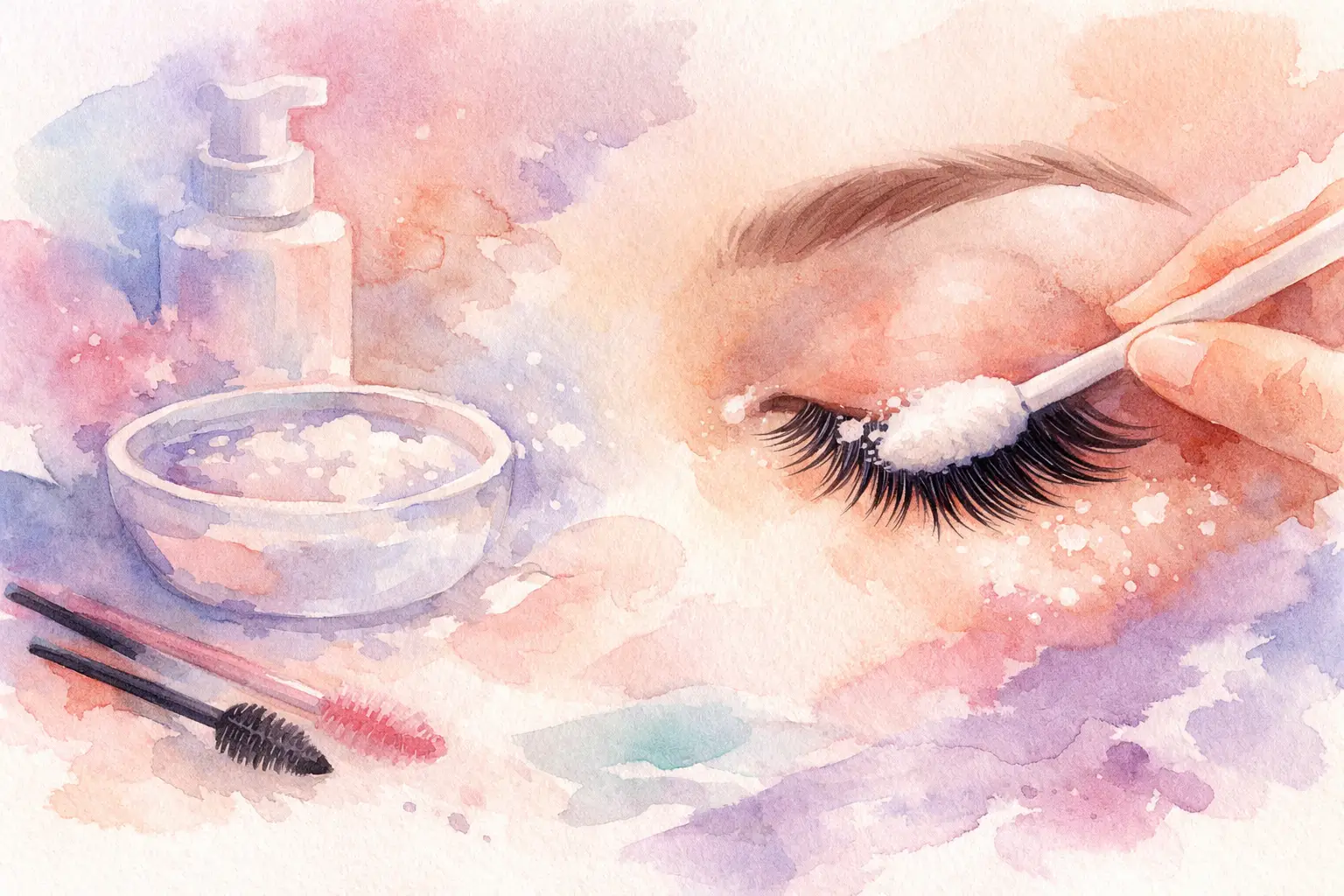
Apply a small amount of cleanser with a soft cleansing brush, clean fingertip, or lint-free applicator. Work in light downward and side-to-side motions along the lash line. Focus on the base where buildup collects most. You do not need aggressive pressure. Gentle, controlled movement is more effective and much safer.
Rinse with lukewarm water. Let the water flow through the lashes rather than blasting them directly with high pressure. The goal is to remove cleanser fully without rough handling.
Then pat dry carefully. Use a soft, lint-free towel or paper towel and press gently around the eye area. Avoid rubbing. Once lashes are mostly dry, you can let them air dry completely or use a fan on a cool, low setting.
Finish by brushing them with a clean spoolie. Brush only when the lashes are dry or nearly dry. Start at the mid-length to ends and lightly shape them back into place. This helps keep them fluffy and separated.
How often should you clean lash extensions?
For most clients, once a day is ideal, especially if you wear eye makeup, have oily skin, exercise often, or live a busy lifestyle where sweat and environmental exposure are part of the day. At minimum, extensions should be cleaned several times a week, but daily cleansing usually gives the best results.
There are some situations where more frequent cleansing makes sense. If you had a workout, cried, wore eyeliner, or spent time outdoors in heat and humidity, your lashes may need extra attention. The key is balance. Clean them regularly, but do not over-handle them throughout the day.
Products to avoid
Not every eye-area product works with extensions, even if it feels gentle on your skin. Oil-based cleansers are the most obvious problem because they can break down lash adhesive faster. Heavy balms, creamy makeup removers, and waterproof makeup products can also create stubborn residue that is harder to remove without friction.
Cotton pads can be tricky because fibers may catch on the extensions. If you use them, keep them away from the lashes themselves. Steam-heavy facials and very hot water are also worth being careful with, especially right after a fresh set or fill.
One more thing clients often overlook is micellar water. Some formulas are fine, while others leave residue or require too much wiping. It depends on the ingredients and how you use it. If you are unsure, stick with a cleanser made specifically for lash extensions.
Common mistakes that shorten lash retention
The biggest mistake is not cleaning the lashes at all. Many clients think skipping water will protect their extensions, but trapped oil and debris usually do more harm than a proper wash.
The second issue is using too much force. Scrubbing at the lash line, rubbing your eyes, or brushing lashes when they are soaking wet can cause premature shedding. Extensions are durable, but they are not meant to be handled roughly.
Another common problem is sleeping on lashes without cleaning away the day. Makeup, natural oils, and skincare residue can sit overnight and build up quickly. If your extensions look messy in the morning, your nighttime routine may need work.
Mascara is another area where it depends. Most lash artists recommend avoiding it entirely, especially on volume sets. If you feel like you need mascara to make extensions stand out, the issue may be style selection rather than aftercare. A customized set should give you the look you want without adding products that are hard to remove.
Keeping lashes clean between appointments
Good lash care is not only about wash day. Your daily habits matter. Try to avoid touching your lashes throughout the day, especially with unwashed hands. Be mindful with skincare and keep heavy creams away from the lash line. If you use eyeliner or shadows, remove them gently and thoroughly before bed.
Sleeping position can help too. Side and stomach sleepers often notice one eye loses lashes faster. A silk pillowcase and mindful sleeping habits can reduce friction, even if they do not solve everything completely.
Regular fills also matter. Even the best home care cannot replace maintenance appointments. Natural lashes shed in cycles, so some loss is expected. A refill schedule keeps your set balanced and prevents gaps from becoming too noticeable.
For lash artists and serious beauty clients
If you are an aspiring lash artist, understanding how to clean lash extensions is more than a client aftercare topic. It is part of professional standards. Sanitation, product knowledge, and client education all affect retention, safety, and client trust.
A strong lash service does not end when the appointment is over. Clients need clear guidance they can actually follow at home. That is one reason professional training matters. Technique creates the look, but aftercare education helps preserve it.
At Lash Therapy Indy, cleanliness and premium lash results go hand in hand. Whether you are booking a service or learning the craft, proper lash hygiene should always be treated as essential, not optional.
When to ask your lash artist for help
If your lashes feel itchy all the time, look unusually twisted, or seem to be shedding faster than normal, ask your lash artist to take a look. Sometimes the issue is product buildup. Other times it may be your cleanser, your makeup routine, or a change in skin oil levels.
This is especially true if you have recently switched skincare products or started using more under-eye creams and serums. Small changes around the eye area can affect your extensions more than you think. A professional can usually spot the problem quickly and recommend a better routine.
Beautiful extensions should feel comfortable, look clean, and fit easily into your everyday life. Once you know how to clean lash extensions properly, aftercare becomes less of a chore and more of a simple habit that keeps your lashes looking fresh between every fill.