Mascara smudges, eyeliner residue, and long-wear concealer can quietly shorten the life of a beautiful lash set. The right oil free makeup remover for extensions helps you take everything off without breaking down adhesive, loosening fans, or leaving buildup along the lash line.
If you wear extensions, makeup removal has to do two jobs at once. It needs to be gentle enough to protect retention and effective enough to remove product completely. When either side gets missed, clients usually notice the same problems – lashes twisting early, poor retention, irritated lids, or a heavy, dirty feeling around the eyes.
Why oil free makeup remover for extensions matters
Most clients hear one rule after a lash appointment: avoid oil around your extensions. That advice is simple, but the reason behind it matters. Lash adhesive is designed to hold through daily wear, cleansing, humidity, and normal skin oils. But repeated exposure to oil-based removers and heavy cleansing balms can weaken the bond over time, especially at the base where extensions are attached.
That does not mean every trace of oil causes instant fallout. Retention depends on several factors, including the adhesive used, your skin type, aftercare habits, and how often product sits on the lash line. Still, if you want your set to last as long as possible, an oil free formula is the safer choice.
There is another reason this matters. Extensions trap more than people realize. Makeup, dust, skincare residue, and natural oils collect between lashes and along the lid. If a remover is too heavy, it leaves a film behind. If it is too harsh, it can dry the eye area and make cleansing uncomfortable. A good remover keeps the area clean without creating a second problem.
What to look for in an oil free makeup remover for extensions
Not every product labeled gentle is extension-safe. The texture and finish matter just as much as the ingredient claim.
A remover for lash extensions should rinse clean, feel lightweight, and avoid greasy residue. Foaming cleansers, water-based liquid removers, and light gel formulas tend to work best because they lift makeup without coating the lashes. Micellar-style removers can work too, but only if they are truly oil free and used carefully so the lash line gets cleaned instead of just wiped over.
It also helps to look for formulas made for sensitive eyes. Fragrance-heavy removers and aggressive exfoliating ingredients can cause stinging, redness, or rubbing – and rubbing is one of the fastest ways to damage extensions.
If you are a lash artist, this is where product selection becomes part of client education. A remover may work well for the rest of the face but still be a poor choice near extensions. Clients do best when they use one product for the eye area and another for heavier complexion makeup if needed.
Ingredients and textures that usually work better
Water-based formulas are usually the easiest fit for extensions. They break down light eye makeup, remove daily debris, and wash away cleanly. A gentle lash cleanser is often the best option for routine use because it is designed to clean the base of the lashes, not just the skin around them.
Gel removers can also work well if they are lightweight and non-oily. They give a little more grip for lifting makeup but should still rinse off fully. If a product feels slippery after washing, it is probably leaving behind more residue than you want.
What to avoid
Cleansing balms, cold creams, and dual-phase removers are usually the biggest issue for extension wearers. Even when they remove makeup quickly, they often leave residue at the base of the lashes. Waterproof mascara removers can be another problem because many rely on oils or emollients to break product down.
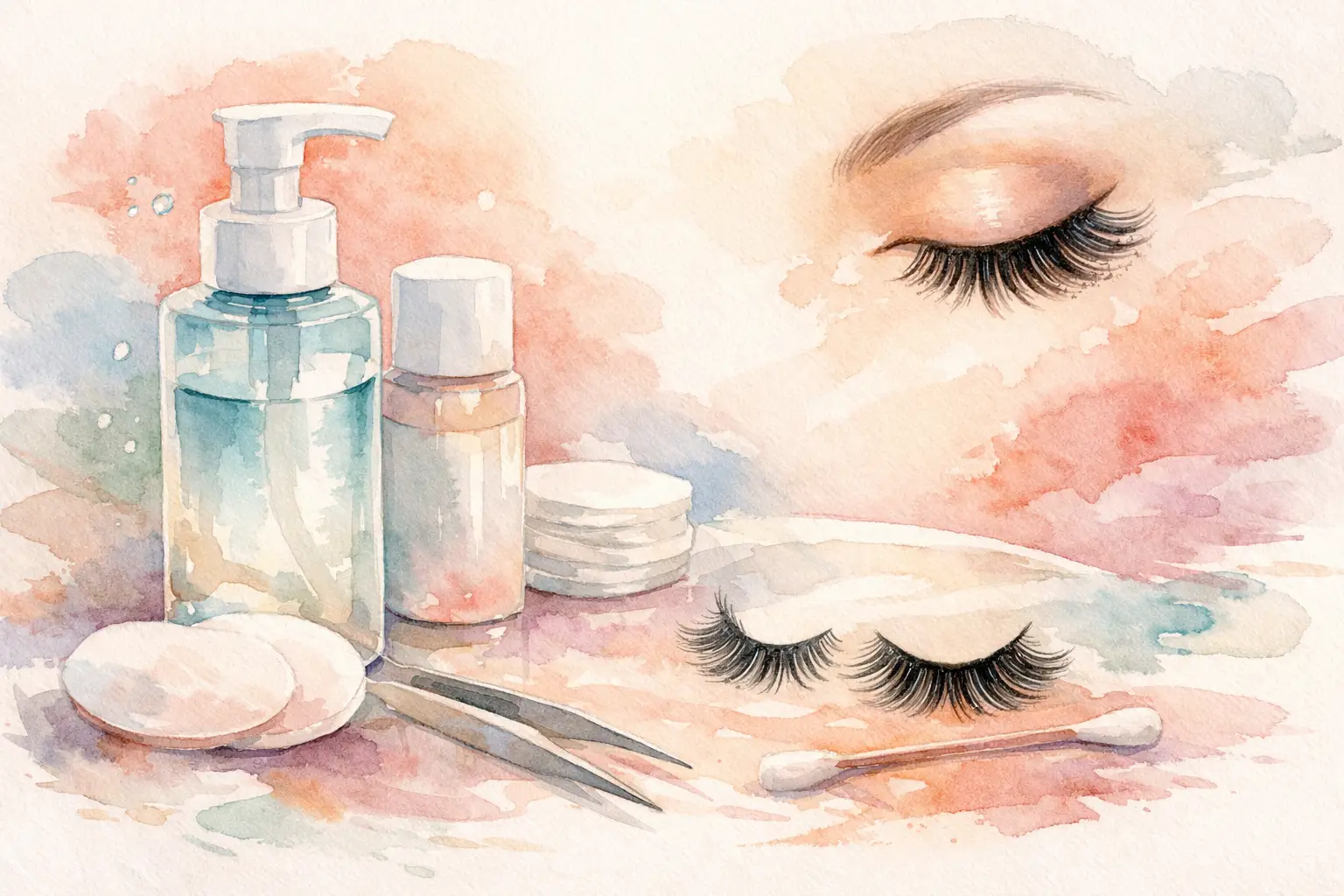
Cotton pads and wipes are not ideal either. They can catch on extensions, pull at the lash line, and leave fibers behind. That does not mean you can never use them around the eye area, but they should not be doing the main work on your extensions.
The best way to remove makeup without damaging extensions
Technique matters as much as the product. Even the best oil free makeup remover for extensions cannot protect retention if the lashes are being rubbed, dragged, or pressed too hard.
Start with clean hands. If you wear heavier face makeup, remove most of your foundation, contour, and lip product first so you are not pushing everything toward the eyes. Then apply your oil free remover to the eye area gently. Instead of rubbing side to side, work in small downward motions and focus on dissolving makeup around the lid and lash line.
For the lashes themselves, use a lash-safe cleanser and a soft cleansing brush if recommended by your lash artist. The goal is to cleanse through the lashes, not flatten them. Work carefully along the base where buildup tends to hide, then rinse thoroughly with water.
After cleansing, pat dry with a lint-free towel or let the lashes air dry partway before brushing them with a clean spoolie. Brush only when they are mostly dry. Extensions are more delicate when soaked, and aggressive brushing on wet lashes can cause unnecessary shedding.
Common mistakes that hurt retention
A lot of extension aftercare problems come from good intentions. Clients want to be gentle, so they avoid washing their lashes often enough. Or they choose a remover marketed for sensitive skin, only to find out it leaves an oily layer behind.
One common mistake is using too much product. Saturating the eye area can make it harder to rinse thoroughly, especially if the remover has a slippery texture. Another is relying on makeup wipes alone. Wipes tend to smear product around instead of fully cleaning the lash line.
Skipping cleanser after workouts is another issue. Sweat, oil, and environmental debris can build up fast, especially for busy clients who are on the go all day. Clean lashes usually hold up better than lashes that are constantly protected from water but never actually washed.
For clients who wear eyeliner daily, placement matters too. Thick liner pushed directly into the lash line can be harder to remove and may lead to more tugging at the base. Extension-friendly makeup habits make aftercare easier from the start.
If you wear a lot of eye makeup, it depends
Some clients wear extensions specifically so they can skip eye makeup. Others still love liner, shadow, and full glam. Neither approach is wrong, but heavier makeup calls for more careful cleansing.
If your daily routine includes long-wear eyeliner or layered eye products, a very basic remover may not be enough. In that case, it is better to use a stronger water-based, oil free formula in a controlled way than to scrub with a weak one. The trade-off is that stronger formulas need to be rinsed especially well to avoid irritation.
If you mostly wear light concealer and occasional shadow, a simple lash cleanser may be all you need around the eyes. That is often the easiest routine for keeping extensions clean, fluffy, and fresh between fills.
For lash artists, aftercare advice should be specific
The best client results come from clear recommendations, not broad warnings. Saying avoid oil is helpful, but clients usually need more than that. They need to know what textures to buy, how often to cleanse, and what signs tell them a product is not working.
This is where professional guidance builds trust. A client who understands why her remover matters is more likely to follow through with aftercare and more likely to enjoy better retention. That creates a better service experience, fewer frustrations between appointments, and healthier natural lashes over time.
At Lash Therapy Indy, that standard of care matters. Premium results are not just about the set applied in the studio. They also come from using the right products at home and keeping the lash line clean with confidence.
How to know your remover is working
A good remover should leave your eye area clean, comfortable, and residue-free. Your extensions should not feel sticky, heavy, or clumped after cleansing. The skin around the eyes should feel fresh, not tight or irritated.
Over time, you may also notice better retention, fewer tangles, and less buildup at fill appointments. That does not mean the remover is the only factor, but it is often one of the easiest improvements clients can make.
If your lashes consistently look dull, close up, or collect visible debris, your current product may not be cleansing well enough. If your eyes sting every time you wash, the formula may be too harsh or not rinsing clean. The right fit should make your routine easier, not more complicated.
Beautiful extensions last longer when aftercare is simple, gentle, and consistent. Choose an oil free remover that cleans thoroughly, respects the adhesive, and fits your real routine – because the best lash results happen between appointments, not just during them.