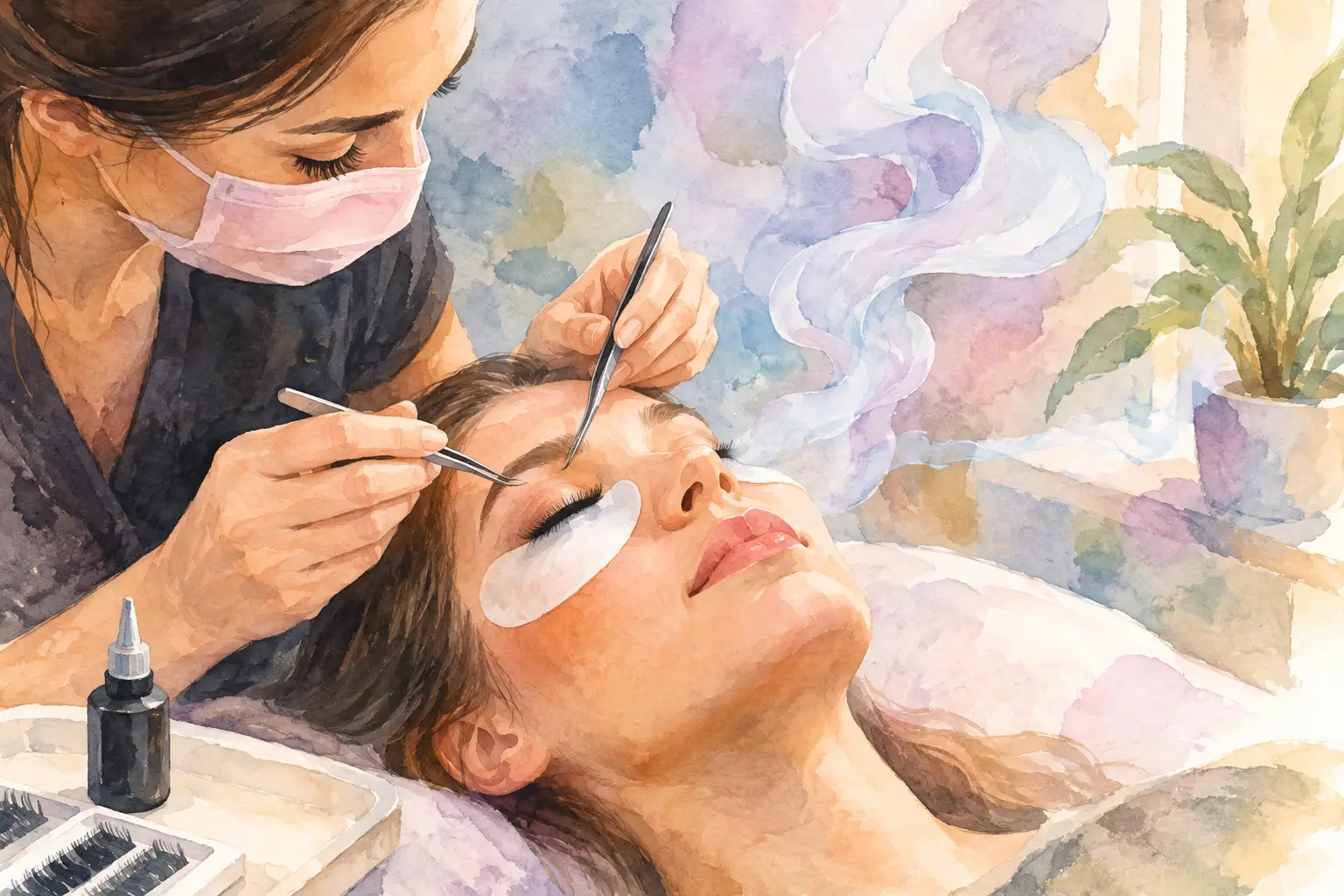
A client should be able to relax with their eyes closed, not spend an appointment tearing up or feeling overwhelmed by adhesive odor. Understanding what causes lash glue fumes helps clients know what to expect and helps lash artists create a more comfortable, polished experience. Fumes are not always a sign that an adhesive is unsafe or low quality, but they are a sign that the adhesive, the room environment, or the application technique may need attention.
Lash extension adhesive is a powerful professional product. When it is used with clean technique, appropriate room conditions, and thoughtful client care, it can support beautiful, long-lasting retention without making the appointment unnecessarily uncomfortable.
What Causes Lash Glue Fumes?
Most professional lash adhesives contain cyanoacrylate, the ingredient that allows extensions to bond securely to a natural lash. The adhesive begins curing when it reacts with moisture in the air and on the natural lash. During that process, small amounts of vapor can be released. That vapor is what artists and clients commonly call lash glue fumes.
The amount a person notices can vary widely. Some clients barely detect an odor, while others have watery eyes, a scratchy throat, or temporary irritation during an appointment. The difference often comes down to the adhesive formula, the amount of fresh adhesive exposed to air, the humidity and temperature in the room, and whether air is moving the vapor away from or directly toward the client.
A noticeable smell does not automatically mean a client is having an allergy. Likewise, a nearly odorless adhesive is not automatically better for every artist or client. The goal is to use a reputable professional adhesive correctly and manage the conditions that affect its curing process.
Fresh Adhesive and Excess Product
A fresh glue drop releases the most vapor when it is first dispensed. If an artist uses a large drop, leaves it exposed for too long, or repeatedly adds adhesive without replacing an old drop, the client may be exposed to more noticeable fumes.
Using more adhesive than the extension needs can also create unnecessary vapor. A properly prepared classic extension or volume fan should carry a controlled amount of adhesive at its base, not a bulky bead. Excess glue can slow the artist down, compromise the finished look, and increase the chance of stickies or poor attachment.
Experienced artists refresh adhesive strategically, use an appropriate glue well or disposable surface, and work with clean, controlled dips. This is one of the reasons professional lash training matters. Strong retention is not created by using the most glue. It comes from correct isolation, clean natural lashes, proper placement, and adhesive that is performing well in the room.
Humidity Changes How Adhesive Cures
Humidity is one of the biggest factors behind lash glue fumes and performance. Cyanoacrylate needs moisture to cure, so a room that is too dry can cause adhesive to cure more slowly. When curing takes longer, the vapor may remain present around the lash line for a longer period.
A room with very high humidity can create a different challenge. Adhesive may cure so quickly that the artist has less time to place the extension accurately. It can also contribute to a whitish residue known as blooming if the adhesive cures improperly on the surface. That does not mean high humidity always produces more fumes, but it can make adhesive behavior less predictable.
Most adhesives are formulated to work best within a specific humidity range. Artists should follow the manufacturer’s recommended conditions rather than rely on a one-size-fits-all number. A hygrometer is a small but valuable studio tool because it gives a real reading of the room instead of a guess.
Temperature Matters, Too
Room temperature affects adhesive speed and consistency. In a cooler space, adhesive may become thicker and cure more slowly. In an overly warm space, it may cure much faster than expected. Both situations can make application more difficult and may affect how much vapor is noticeable during the service.
Temperature and humidity work together. An adhesive that performs beautifully on one day may feel different the next if the studio’s heating, air conditioning, or weather conditions change. Professional artists monitor both, then select an adhesive and application pace that fit the environment.
Ventilation Can Help or Hurt
Good ventilation is about exchanging room air, not blasting a client’s face with a fan. A well-ventilated lash space helps prevent adhesive vapor from lingering around the bed. Fresh air circulation, appropriate room filtration, and a clean work area can all improve comfort.
However, direct airflow can create problems. A fan aimed toward the client’s face may push fumes directly into the eyes or nose. Strong airflow can also make adhesive cure inconsistently, especially during fan making or placement. If a client feels fumes, the answer is not always “more fan.” The direction and strength of airflow matter.
Clients should also remain fully still with their eyes gently closed throughout the application. Talking with the eyes partially open, looking around, or lifting the eyelids can allow vapor to reach the eye surface. Under-eye pads and tape should be placed securely and comfortably so they do not shift or encourage the eyes to open.
Client Sensitivity Is Not the Same as an Allergy
Temporary watery eyes during an appointment can happen when a client is sensitive to adhesive vapor, has dry eyes, or has had a long day of screen time, allergies, or seasonal congestion. This is different from a true allergic reaction, though the symptoms can sometimes feel similar at first.
An adhesive allergy often develops after prior exposure and may include itching, swelling, redness that continues after the appointment, tenderness, or irritation around the eyelids. Symptoms can appear hours later rather than only while the client is on the lash bed. No adhesive can promise that an allergy will never occur, even if it is marketed as sensitive or low fume.
A client who experiences significant swelling, pain, vision changes, difficulty breathing, or symptoms that continue should seek advice from a qualified medical professional promptly. Lash artists should not diagnose allergies or medical conditions. Their role is to stop the service when needed, document the concern, and prioritize the client’s safety.
It is also worth remembering that irritation may come from something other than the adhesive. Eye pads, tape, cleansing products, makeup residue, seasonal allergies, or a client’s eyes being slightly open can all contribute to discomfort. A thorough consultation and careful observation are more useful than assuming every reaction is caused by glue fumes alone.
How Lash Artists Can Reduce Fume Exposure
Reducing fume exposure starts before the first extension is applied. The lash area should be thoroughly cleansed so adhesive can bond efficiently, while the client’s under-eye area should be dry, comfortable, and properly protected. Artists should use adhesive that is fresh, stored according to its instructions, and suited to their room conditions and application speed.
Replace adhesive drops regularly instead of trying to stretch one drop through an entire service. Use only the amount needed for a secure attachment, and avoid waving a handheld fan directly over uncured adhesive near the client’s face. Controlled curing methods may be appropriate after placement, but they should support the adhesive manufacturer’s instructions rather than work against them.
Sanitation is part of comfort, too. Clean tools, disposable application materials where appropriate, and organized product handling help create a professional service from start to finish. At Lash Therapy Indy, client comfort and clean technique are treated as part of the artistry, not an optional extra.
What Clients Can Do Before an Appointment
Clients can help make their service more comfortable by arriving without eye makeup, mascara, or oily skincare around the eye area. Avoid caffeine or stimulants immediately before the appointment if they make it hard to relax and keep the eyes closed. If you have dry eyes, seasonal allergies, recent eye irritation, or a history of reacting to lash adhesive, tell your lash artist before the service begins.
Be honest about previous reactions, even if they happened at another salon. That information allows your artist to discuss realistic options and decide whether it is appropriate to proceed. A patch test may be discussed in some cases, but it cannot guarantee that a future allergy will not develop.
If you feel burning, strong discomfort, or the need to open your eyes during your appointment, speak up right away. A professional artist would rather pause, adjust the pads, check airflow, or reassess the service than have you try to push through discomfort.
Beautiful lashes should feel like a confidence boost, not a compromise. Choosing a trained artist, communicating openly, and respecting the role of adhesive conditions helps create the comfortable, premium lash experience every client deserves.