A set can look flawless at the end of an appointment and still shed too soon if the adhesive was not curing in the right environment. This lash glue humidity guide gives lash artists a practical way to read the room, adjust their technique, and protect the beautiful, long-lasting results clients expect.
Humidity is not a minor detail in lashing. It directly affects how quickly cyanoacrylate adhesive cures, how workable each adhesive bead feels, and whether the bond has time to form properly around the natural lash. When an artist understands humidity, retention becomes far less mysterious.
Why Humidity Changes Lash Glue Performance
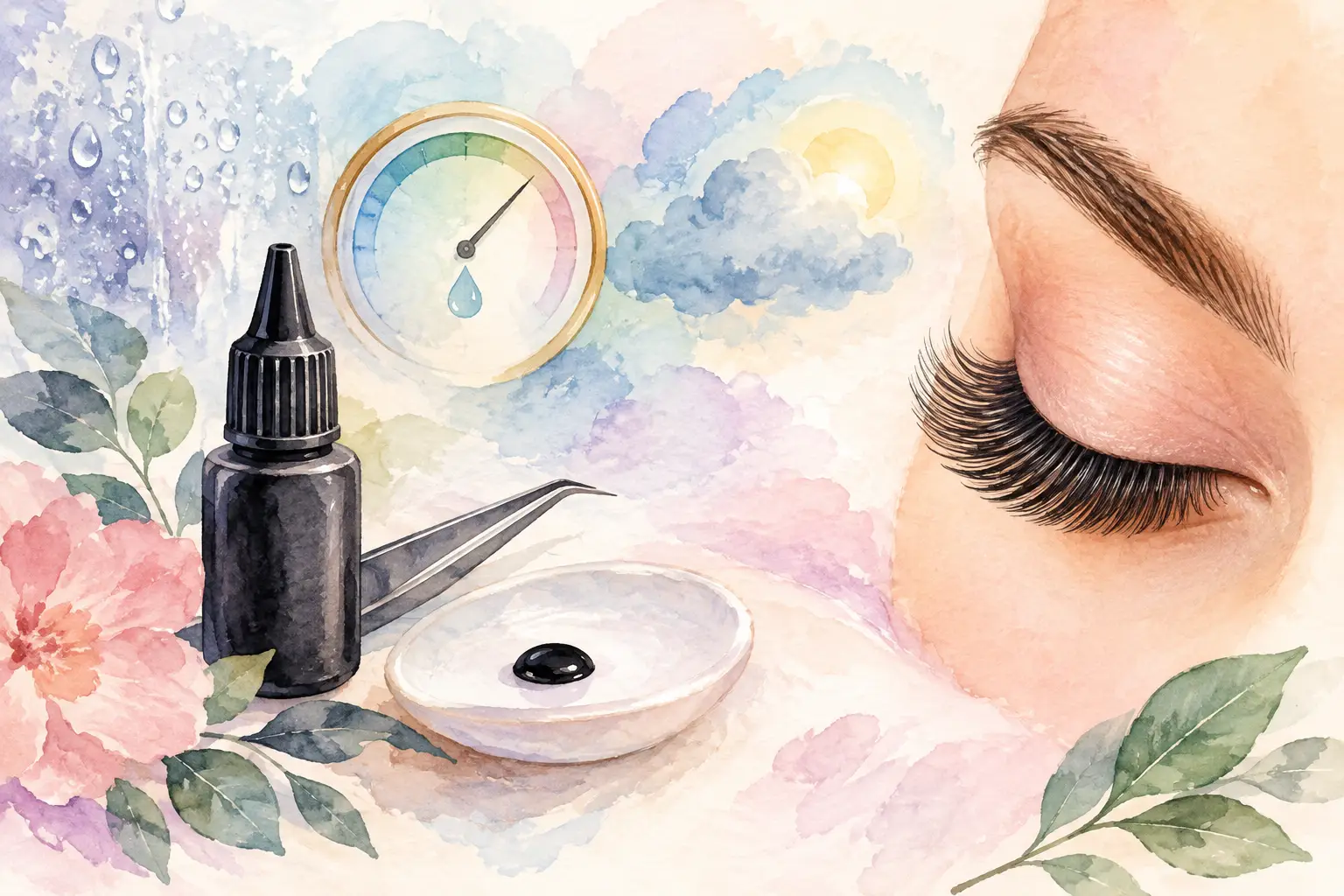
Most professional lash adhesives cure by pulling moisture from the air and the surrounding lash environment. Relative humidity tells you how much water vapor is present in the air compared with the maximum amount the air can hold at that temperature. More moisture generally means faster curing. Less moisture generally means slower curing.
That sounds simple, but the practical effect can be dramatic. In a dry studio, adhesive may stay wet longer than expected. The lash artist can have more time to create a clean fan placement, but the extension may slip, shift, or fail to bond securely if the glue is not cured at the right point.
In high humidity, adhesive can cure before the extension is fully wrapped or placed. The artist may notice the bead becoming tacky quickly, a brittle-looking bond, or an extension that seems attached but does not have a strong connection to the natural lash. Fast does not automatically mean better.
For clients, the result of an improperly managed environment is often frustrating: premature shedding, uneven retention, or extensions that twist as the bond weakens. For artists, it can mean longer appointments, more stress, and avoidable fills. Consistent room conditions support consistent work.
Lash Glue Humidity Guide: Find Your Adhesive’s Range
Every adhesive has a recommended humidity and temperature range from its manufacturer. That range should always lead your decision-making. A glue designed for 40% to 60% relative humidity will not necessarily perform well at 70%, even if another adhesive does.
Many professional adhesives perform best within a moderate range, often around 40% to 60% relative humidity. Temperature matters alongside humidity because warm air can change how quickly adhesive behaves and because relative humidity shifts as the room warms or cools. A studio that feels comfortable to you may still be outside the adhesive’s ideal working conditions.
Start each day by checking a reliable digital hygrometer placed near your lash bed or work area. Do not place it directly under an air vent, beside a humidifier, or in a sunny window. You want a reading that reflects the environment where the adhesive is actually being used.
It also helps to record the humidity, temperature, adhesive used, and any retention feedback for a few weeks. This is especially valuable for new artists building confidence with their timing. Patterns become clear quickly: perhaps your preferred glue cures beautifully at 48% humidity, while at 62% you need a fresher bead and a faster placement pace.
Low Humidity: When Glue Cures Too Slowly
Low humidity is common during Indiana winters, when indoor heat dries the air. If the room is too dry for your adhesive, the glue may remain wet longer and feel more fluid than usual. You may see extensions sliding down the natural lash, bases that do not grip as securely, or stickies developing because neighboring lashes touch before the bond has cured.
The best correction is controlled moisture, not guesswork. A clean, well-maintained humidifier can raise room humidity gradually. Give the room time to stabilize before changing your application technique. A sudden jump from very dry air to high humidity can create a different set of problems.
You can also choose an adhesive formulated for lower humidity if your studio consistently runs dry. This may be a smarter long-term solution than forcing one adhesive to work in conditions it was not made for. Follow manufacturer instructions closely, especially when considering products that add moisture to the adhesive environment.
High Humidity: When Glue Cures Too Fast
Indianapolis summers can bring the opposite issue. On muggy days, high humidity can make adhesive cure so quickly that an artist loses the smooth, controlled placement needed for strong attachment. A glue dot can skin over before the extension reaches the natural lash, leaving a weak surface-level bond.
If humidity is high, begin by reducing excess moisture in the room with air conditioning or a dehumidifier appropriate for the studio size. Keep doors and windows closed as much as possible during appointments. Replace adhesive drops more frequently, because a bead that looked workable a few minutes ago may no longer be fresh enough for dependable bonding.
A slower-curing adhesive may also give experienced artists more working time in a humid environment. There is a trade-off: a slower adhesive can be helpful during humid weather but may feel too slow once the season changes. Keep your adhesive selection intentional rather than relying on one bottle all year.
Temperature and Humidity Work Together
Humidity readings alone do not tell the entire story. A room that is too cold can slow adhesive behavior and make both the artist and client uncomfortable. A room that is overly warm may speed up curing, increase humidity concerns, and make it harder for a client to relax through a longer appointment.
For many lash studios, a comfortable, stable room temperature in the low 70s is a practical goal. However, your adhesive label is the authority. Check its recommended temperature range and keep your room as steady as possible from the first appointment to the last.
Avoid placing the lash bed directly beneath a vent, fan, or portable heater. Airflow can create little pockets of temperature and humidity that do not match the reading on the other side of the room. It can also dry the client’s eyes, move lightweight lashes, and make precise placement more difficult.
Technique Still Matters
A perfect hygrometer reading cannot fix poor adhesive habits. Humidity management works best alongside clean preparation, proper isolation, fresh adhesive, and a controlled amount of glue at the base of every extension or fan.
Use a fresh adhesive drop according to the product’s working time and your room conditions. If the surface starts to look stringy, thick, dull, or uneven, replace it. Keeping the bottle nozzle clean and tightly capped between uses also helps preserve the adhesive inside the bottle.
Preparation matters just as much. Natural lashes should be clean and free from oils, makeup residue, and heavy skincare products. A client who arrives with product buildup may experience poor retention even when the humidity is ideal. This is why a professional consultation and thorough lash cleansing are part of premium service, not optional extras.
For volume artists, humidity awareness is especially useful. Fans are lightweight and need precise attachment. If adhesive cures before placement, the fan may attach only partially. If it stays too wet, the fan can close, slide, or create a bulky base. Adjusting your pace, adhesive amount, and drop-change schedule helps preserve the clean, lightweight finish clients love.
Common Retention Problems That Look Like Humidity Issues
Not every retention concern comes from the room. Lash growth cycles, aftercare, medication changes, oily skin, steam exposure, and clients picking or sleeping heavily on their lashes can all affect how long extensions last. A skilled artist should look at the whole picture before blaming the adhesive.
Still, when several clients report similar retention concerns in the same week, check the environment first. A sudden cold snap, a broken HVAC system, or a humidifier running too high can change adhesive performance without being obvious. This is why a hygrometer is one of the most valuable tools at a lash station.
Artists should also watch for storage issues. Adhesive exposed to heat, moisture, direct light, or air inside the bottle can degrade before its listed expiration date. Store unopened and opened products according to manufacturer instructions, and label each bottle with the date it was opened. High-quality supplies deserve high-quality handling.
Build a More Consistent Lash Environment
A professional lash space should feel calm for clients and predictable for artists. Check humidity and temperature before appointments, monitor changes through the day, and make one controlled adjustment at a time. If you change the dehumidifier setting, switch adhesives, and alter your technique all at once, it becomes difficult to know what solved the problem.
At Lash Therapy Indy, education and sanitation are treated as essential parts of beautiful lash work. Whether you are building your first client base or refining an established service menu, learning to manage your adhesive environment helps protect your time, your reputation, and your clients’ investment.
The goal is not to chase a perfect number on a screen. It is to understand how your chosen adhesive behaves in your studio, then create the clean, stable conditions that let your artistry shine at every appointment.