
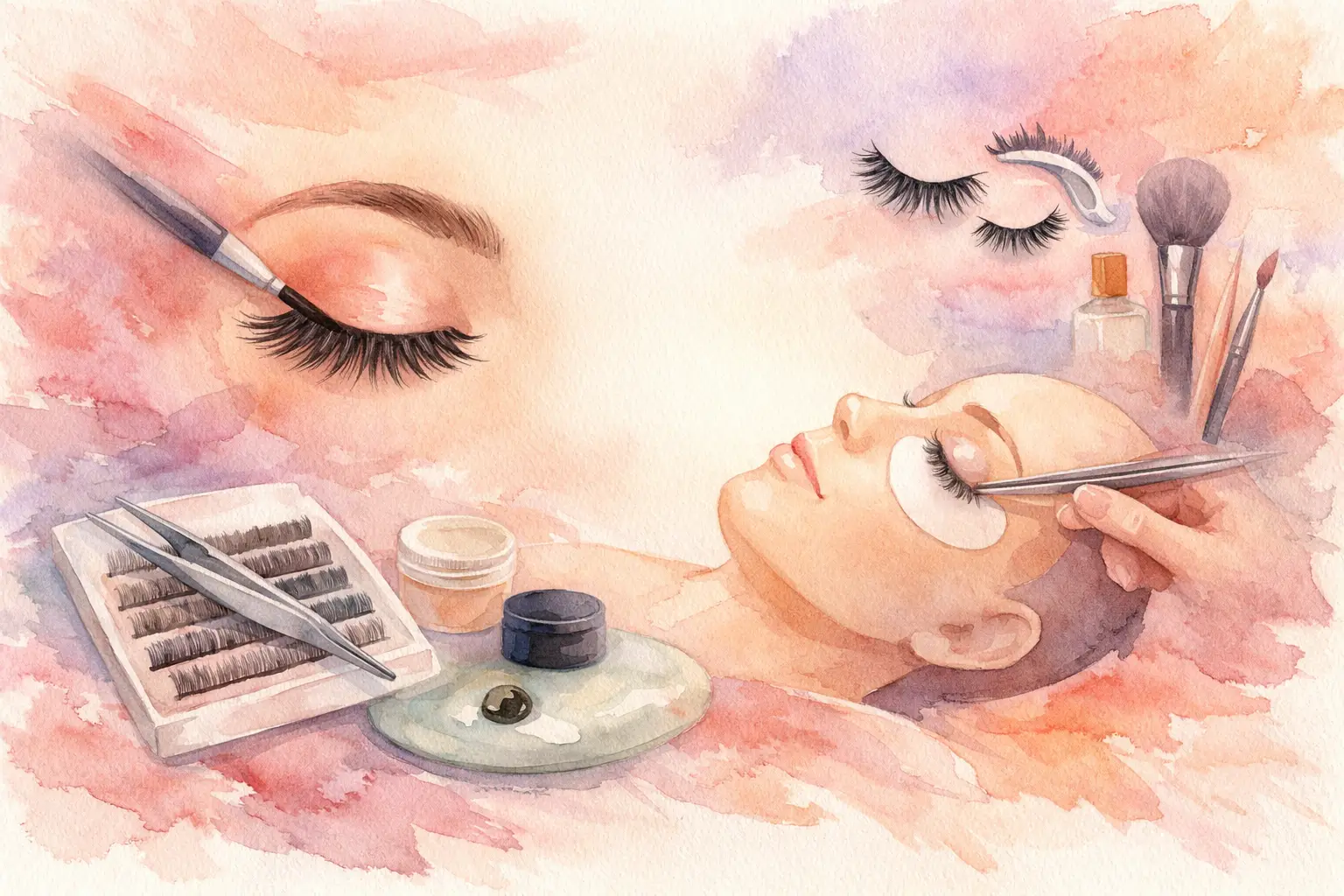
A lash training course can shape your entire career – not just your first set of lashes. If the training is thorough, hands-on, and state-aligned, you leave with real technique, stronger confidence, and a clear path into the beauty industry. If it is rushed or overly basic, you can end up spending more time and money trying to fill the gaps later.
That is why choosing a course deserves the same care you would give a full set. The right program should teach more than application. It should prepare you to work safely, create consistent results, understand lash health, and serve clients with professionalism from day one.
What a lash training course should actually teach
A quality lash training course starts with fundamentals, but it should not stop there. You need to understand lash types, curl patterns, diameters, lengths, styling options, isolation, placement, adhesive control, and safe removal. These are not small details. They are the difference between beautiful retention and frustrating fallout, between healthy natural lashes and avoidable damage.
Sanitation matters just as much as styling. In lash education, cleanliness is not a bonus feature. It is part of the job. A strong course should cover disinfection, workstation setup, tool care, eye safety, product handling, and client protection in a way that feels practical and non-negotiable.
The best programs also teach consultation skills. Every client brings a different eye shape, natural lash condition, lifestyle, and desired look. A lash artist needs to know when to recommend a soft classic set, when volume is appropriate, and when a client should scale back for the health of their natural lashes. That kind of judgment comes from education, not guesswork.
Why hands-on practice matters in a lash training course
Lash extensions are not a skill you learn by watching alone. Theory gives you the foundation, but hand placement, speed, tension, and isolation improve through repetition. A lash training course should include meaningful hands-on practice so you can develop muscle memory and correct mistakes while an educator is there to guide you.
This is where many students see the biggest difference between average training and professional training. Some courses give plenty of information but very little real practice. Others walk students through live models, feedback sessions, and correction in real time. That live support can save months of uncertainty once you begin taking clients.
Hands-on training also reveals how you respond under realistic conditions. It is one thing to create neat fans at a desk. It is another to work carefully around watery eyes, sensitive clients, or different lash growth patterns. A course that includes supervised application time helps bridge the gap between classroom learning and real-world service.
Certification, state requirements, and why details matter
Before enrolling, it is smart to look closely at certification and local requirements. Not every lash training course offers the same level of credibility or career value. Some are designed as informal workshops, while others are built to support students pursuing professional practice in a more structured, compliant way.
If you plan to work in Indiana, state expectations matter. You want training that aligns with the licensing or regulatory environment you will actually be working in. This is one of those areas where cheaper is not always better. A lower-cost class may look appealing upfront, but if it does not provide the right educational framework, you may still need additional training later.
Ask direct questions before you sign up. Is the program state-certified or aligned with state expectations? Does it provide a certificate of completion? How many training hours are included? Is sanitation covered thoroughly? Are students evaluated on technique, or do they simply attend and receive a certificate? Those answers tell you a lot about the seriousness of the program.
Not all educators teach with the same standards
A strong educator does more than demonstrate a perfect set. They know how to explain the why behind each step, catch errors early, and help students build skills in a way that feels clear and supportive. In a field as detail-driven as lash artistry, teaching ability matters just as much as technical ability.
Look for an educator or program with a consistent reputation for professionalism, cleanliness, and quality work. If a trainer emphasizes retention, lash health, proper isolation, client comfort, and sanitation, that is a good sign. If the course seems focused only on speed or social media appeal, it may not give you the foundation needed for long-term success.
The learning environment matters too. Students tend to perform better when they feel comfortable asking questions and getting honest feedback. Supportive does not mean casual. It means you are being taught by someone who wants you to meet a high standard and knows how to help you get there.
Business training can be just as valuable as technique
Many aspiring artists enroll in a lash training course because they want more than a certificate. They want a career. That is why business education can make a real difference.
The technical side gets you started, but business skills help you grow. A well-rounded course may include client communication, pricing, appointment preparation, retention education, rebooking strategy, consent forms, aftercare guidance, and basic marketing. If your goal is to build your own books or eventually run your own lash business, these lessons matter.
There is a practical side to this. New artists often feel confident applying lashes but less certain about setting policies, managing time, or explaining fills and aftercare to clients. Training that addresses those topics gives you a stronger start and helps you come across as polished and professional from the beginning.
The right lash kit and products make training better
Products affect performance. A lash training course should introduce students to professional-grade tools and explain how to use them correctly. Adhesive behavior, tweezer grip, lash strip organization, under-eye pad placement, and remover safety all influence your work.
This does not mean you need the largest kit possible. Bigger is not always better. A useful student kit includes products you will actually train with and understand, not just a long list of items to make the package sound impressive. Quality, consistency, and proper instruction are what count.
It also helps when a training provider understands the products working artists rely on every day. That connection between education and real service conditions is valuable. At Lash Therapy Indy, that standard is part of the training mindset – practical education, premium products, and techniques students can carry into actual client work.
How to tell if a lash training course is right for you
The right course depends partly on where you are starting. If you are brand new, you need a program that builds from the ground up without assuming prior experience. If you already work in beauty, you may want a course that sharpens technique and adds lash-specific business training. In both cases, the best choice is one that meets you at your current level while still challenging you.
Pay attention to how the course is presented. Is the information clear? Are expectations explained? Is there a focus on both artistry and safety? Are class sizes reasonable enough for individual attention? These details affect the student experience more than many people realize.
It is also worth considering support after class ends. Some students need help troubleshooting retention, mapping, timing, or product selection once they begin working on their own. Post-training support can be a major advantage, especially in the first few months.
Common mistakes students make when choosing training
One common mistake is choosing based on price alone. Budget matters, but education is an investment in your skill set and reputation. A course that gives you stronger technique, cleaner habits, and better client results can pay off far more than the cheapest option available.
Another mistake is focusing only on the certificate instead of the curriculum. A certificate looks nice, but what you can do with confidence is what really matters. Clients are not booking because you attended a class. They are booking because your work is safe, beautiful, and consistent.
Students also sometimes underestimate the importance of sanitation and professional standards. In reality, those are core parts of the service. Your setup, your hygiene, and your ability to protect the client are part of your brand from the first appointment onward.
Building a career after your lash training course
Completing a lash training course is the start of your professional standard, not the finish line. The artists who grow strongest are usually the ones who keep practicing, keep refining, and stay committed to quality. They care about retention, styling, client comfort, and clean work every single time.
A great course gives you that foundation. It helps you understand not just how to place extensions, but how to think like a professional. That includes knowing when to slow down, when to adjust a map, when to protect lash health, and how to create an experience clients trust.
If you are serious about becoming a lash artist, choose training that respects the craft. Look for education that values sanitation, hands-on learning, certification, and real-world preparation. The right start can make your work stronger, your clients happier, and your next step feel a lot more certain.
A beautiful set gets attention, but a well-trained artist builds trust – and that is what creates a lasting career.