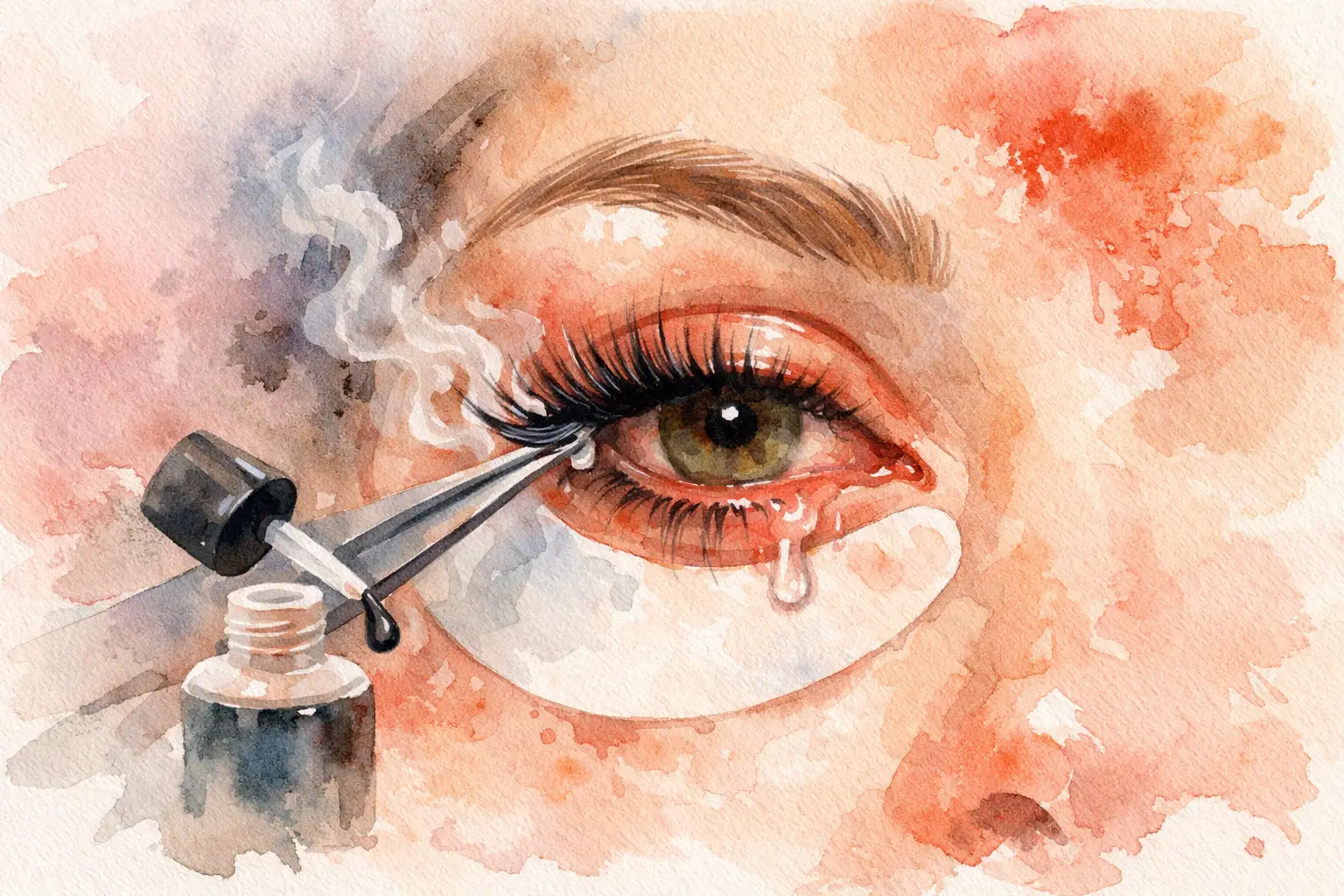
A stinging, watering eye in the middle of a lash appointment can turn a relaxing beauty service into a real concern. If you are wondering why lash glue burns eyes, the short answer is usually adhesive fumes reaching the eye surface – but the reason those fumes got there matters. Burning is not a normal part of a lash extension service, and it should never be brushed off as something you simply have to tolerate for beautiful lashes.
Professional lash adhesive is designed to cure quickly and create a durable bond between the natural lash and the extension. When it is applied correctly, with the eyes fully closed and the environment properly managed, most clients can enjoy comfortable wear. When discomfort starts, a trained lash artist should pause, assess the situation, and protect the client’s eye health before continuing.
Why Lash Glue Burns Eyes During an Appointment
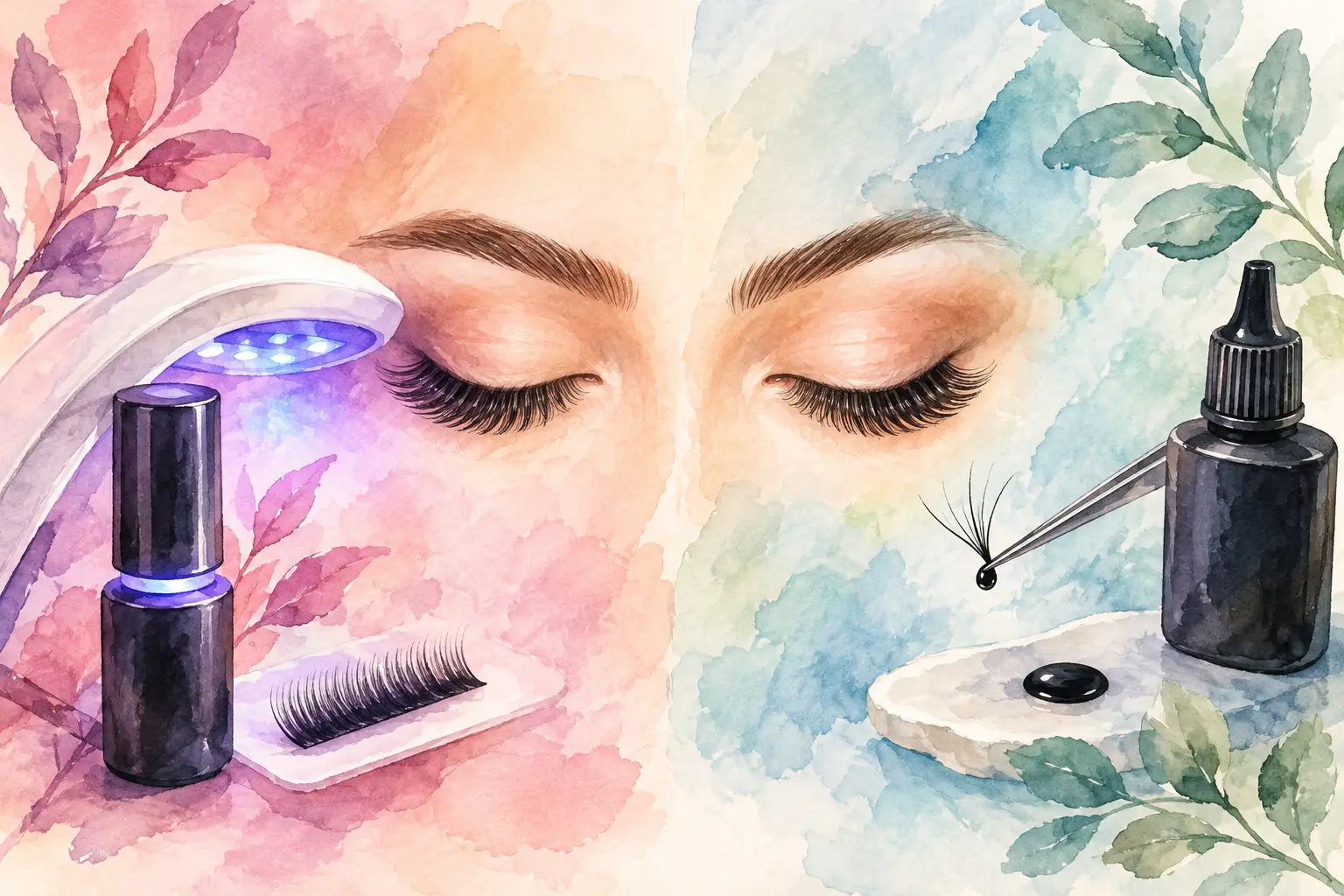
Most professional lash glues contain cyanoacrylate, the ingredient responsible for that secure, long-lasting bond. As the adhesive cures, it releases vapors. These vapors can irritate the eyes, especially when an eye is not fully closed, an under-eye pad shifts, or the client has watery or sensitive eyes that day.
This is often called a fume irritation or chemical irritation. It may feel like stinging, burning, watering, redness, dryness, or a gritty sensation. In many cases, both eyes are affected because both eyes were exposed to fumes. The symptoms may be most noticeable when you open your eyes at the end of the service.
A skilled artist watches for this risk throughout the appointment. Proper isolation, precise adhesive control, a comfortable lash bed position, and frequent checks that the client’s eyes remain fully closed all reduce exposure. Sanitation and technique are not just about a polished set. They are essential to client comfort and safety.
Eyes that are slightly open
Even a tiny gap between the eyelids can allow adhesive vapors to reach the eye. Some clients naturally rest with their eyes partially open, often without realizing it. Others may struggle to keep their eyes closed because they are talking, anxious, uncomfortable on the lash bed, or reacting to an under-eye pad placed too high.
This is why a client should always speak up if an eye feels like it is being pulled, watered excessively, or cannot close comfortably. The artist can adjust the pad, tape, or positioning right away. Staying quiet through discomfort can make irritation worse.
Too much adhesive or slow curing conditions
More glue does not create better retention. An oversized adhesive bead can produce more fumes and may cure improperly. Humidity, room temperature, and the specific glue formula also affect curing speed. Adhesive that cures too slowly may keep releasing fumes longer, while glue that cures too quickly can be difficult for an artist to work with accurately.
Professional lash artists select adhesive based on their skill level, application speed, and studio conditions. They also replace adhesive drops regularly, use an appropriate amount on each extension, and keep products stored according to manufacturer guidance. These details make a visible difference in both retention and comfort.
Under-eye pads, tape, or product placement
Sometimes the glue is not the only source of burning. Under-eye pads that sit too close to the lower waterline can cause tears and irritation. Tape can pull delicate skin or make it hard to close the eyes. Cleansing products, primers, gel removers, and even makeup residue can also migrate into the eyes if they are not used carefully.
A comfortable lash service starts before the first extension is placed. The eye area should be clean, the pads should feel secure but never scratchy, and the client should be able to close both eyes naturally.
Irritation, Allergy, and a Chemical Injury Are Not the Same
Burning eyes after a lash appointment deserve attention because similar symptoms can have different causes. Fume irritation is generally an immediate reaction. It commonly appears during the appointment or shortly after, with watery, red, or burning eyes. It may improve over the next day or two once the eye is no longer exposed to vapors.
An adhesive allergy is different. Allergic reactions more often involve itchy, swollen eyelids, redness around the lash line, tenderness, or puffiness that develops hours later or the next day. It may happen after several appointments, even if you wore extensions comfortably in the past. Prior tolerance does not guarantee that a person will never develop a sensitivity.
A chemical injury is more urgent. Severe pain, worsening redness, blurred vision, light sensitivity, significant swelling, or a feeling that something is stuck in the eye should not be managed as routine lash irritation. If adhesive or remover gets directly into the eye, flush the eye immediately with clean lukewarm water or sterile saline and seek urgent medical advice. Do not wait for a refill appointment to see whether it settles down.
Your lash artist can help identify what happened during the service, but they cannot diagnose eye conditions. When vision changes or pain is significant, an eye care professional is the right next step.
What to Do if Your Eyes Burn After Lash Extensions
The first step is to stop rubbing your eyes. Rubbing can worsen irritation, shift fresh extensions, and introduce bacteria to an already sensitive area. If you are still at the appointment, tell your artist immediately. A professional should stop working, check that the eyes are fully closed, remove or reposition anything causing discomfort, and give you clear aftercare guidance.
Once you are home, avoid eye makeup, contact lenses, lash shampoos, and additional beauty products around the eyes until the irritation has settled. A cool, clean compress over closed eyes may feel soothing. Artificial tears may be appropriate for some clients, but ask a pharmacist or eye care professional if you are unsure which product is right for your symptoms.
Do not attempt to pull off extensions, saturate them with oil, or use a store-bought remover near a burning eye. Lash removal products are strong and require careful professional handling. If removal is recommended, schedule it with a qualified lash professional once it is safe to do so.
Seek prompt medical care if symptoms are severe, do not begin improving, or include blurred vision, discharge, intense pain, light sensitivity, or swelling that continues to increase. Your eyesight is always more valuable than a lash set.
How a Professional Lash Studio Prevents Burning
A safe, premium lash experience is built on consistent practices, not guesswork. At Lash Therapy Indy, client comfort, sanitation, and personalized application are part of the service standard. The right appointment should feel calm, clean, and closely monitored from consultation to final check.
A qualified artist begins by asking about eye sensitivity, recent eye procedures, seasonal allergies, contact lens use, and past reactions to extensions. Those answers help determine whether a service should proceed, whether a modified approach is appropriate, or whether waiting is the better choice. For example, a client with an active eye infection, severe seasonal eye irritation, or recent eye surgery should postpone extensions and follow their medical provider’s guidance.
During the service, the artist should use clean tools, fresh disposables where appropriate, controlled adhesive amounts, and properly placed eye pads. Ventilation matters too, but it needs balance. Airflow that is too strong can make adhesive cure unpredictably or cause the eyes to water. The goal is a clean, comfortable studio environment that supports proper adhesive performance.
Clients also have a role in prevention. Arrive with clean lashes and minimal eye makeup, remove contact lenses before the service when possible, and mention any discomfort as soon as it starts. Avoid caffeine right before an appointment if it makes your eyes flutter, and try not to talk continuously while the artist is placing lashes. These small adjustments can help your eyes stay relaxed and fully closed.
Patch tests: useful, but not a guarantee
A patch test may be considered for clients with a history of sensitivity or anxiety about an adhesive reaction. However, a negative patch test cannot promise that no irritation or allergy will occur during a full service. Fume irritation is often related to exposure during application, while an allergic response can be unpredictable and may develop over time.
Honest consultation and careful technique remain the best protection. If you have previously had eyelid swelling, rash, or a strong reaction after extensions, tell your artist before booking. It may be safer to choose another beauty service rather than risk another exposure.
Beautiful lashes should never come with the expectation of burning, pain, or compromised eye comfort. Choose a certified artist who prioritizes clean application, listens when something feels off, and knows when to pause. That level of care protects more than your lash retention – it protects the confidence you should feel every time you open your eyes.