A beautiful full set can take two, three, or even four hours of focused work. If your pricing only covers the lash tray in your hand, you are not being paid for your precision, training, sanitation, setup, cleanup, or the client experience that keeps people coming back. Knowing how to price lash sets is one of the most important business skills a lash artist can build.
Your prices should feel fair to clients and sustainable for you. That does not mean being the cheapest artist in your area. It means delivering clear value through safe application, polished styling, quality products, comfortable appointments, and reliable results.
Start With Your True Cost Per Appointment
Before looking at what other artists charge, calculate what each appointment actually costs your business. Lash supplies are only one part of the picture. A classic set may use fewer lashes than a volume set, but every service still requires clean tools, disposables, adhesive, prep products, and a properly maintained workspace.
Your appointment costs generally include:
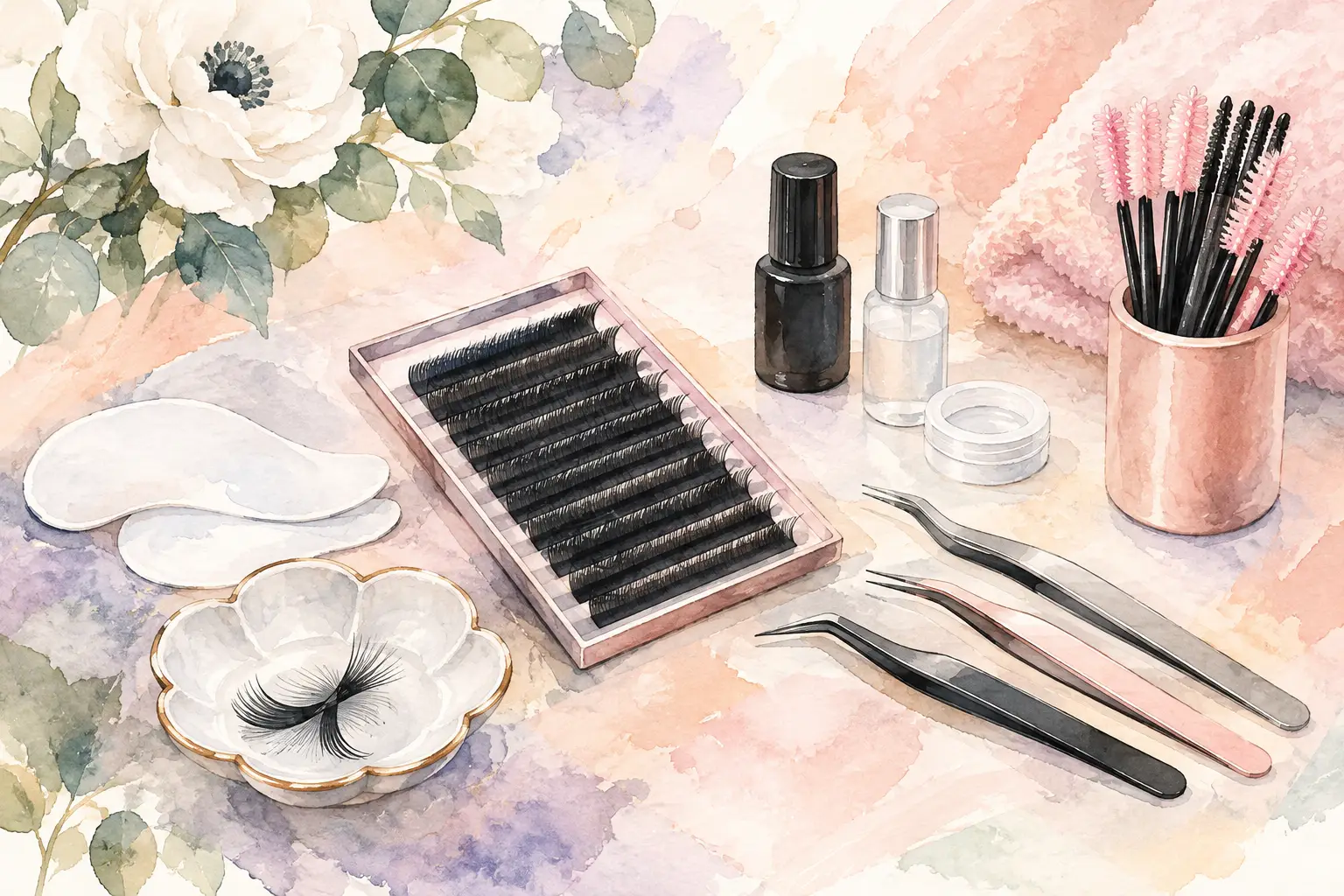
- Lash trays, adhesive, primer, remover, cleanser, sealant, tape, eye pads, and disposable applicators
- Sanitizing products, tool maintenance, laundry, and other cleanliness essentials
- Studio rent, utilities, booking software, payment processing, insurance, and licensing
- Marketing, continuing education, taxes, and the time spent communicating with clients
Estimate the average supply cost for each service, then add a portion of your monthly overhead. For example, if your supplies average $12 for a classic set and your overhead works out to $18 per appointment, you are already at $30 before paying yourself for your time.
This is why copying a low price from social media can hurt a new lash business. You may fill your schedule while quietly losing money or working long hours for very little take-home pay.
Price Your Time Like a Skilled Professional
Lashing is detailed work. Your hands, eyes, posture, judgment, and technical knowledge are part of the service. Set an hourly income goal that reflects your experience, demand, and financial needs.
Start by timing your appointments honestly. Include consultation, mapping, cleansing, isolation, application, checkout, photos, cleanup, and reset time. If a full hybrid set takes two and a half hours from start to finish, price the complete appointment – not only the time you spend placing extensions.
A simple formula is:
Service price = supply cost + overhead share + desired hourly pay for total appointment time
Say your desired pay is $45 per hour, your hybrid service takes 2.5 hours, supplies cost $18, and your overhead share is $20. Your starting price would be about $150. This gives you a number based on your business, rather than a guess based on what feels comfortable to charge.
As your speed improves, do not immediately lower your price. Efficiency can improve your profitability and make appointments more convenient for clients. Your education, retention, styling ability, and customer care still hold value.
How to Price Lash Sets by Style and Coverage
Each lash set should have a clear starting price that reflects its time, product use, and level of artistry. Classic, hybrid, volume, and mega volume sets should not be priced too closely together when the application process and material use differ significantly.
Classic Sets
Classic lashes are often the entry point for clients who want a mascara-like look. They may use less product, but clean isolation and safe placement still require focus. Price classics high enough to honor the technique, especially if you provide a detailed consultation and customized mapping.
Hybrid Sets
Hybrid sets blend classic extensions with handmade or premade fans for added texture and fullness. They are a popular option because they can be tailored from soft and natural to noticeably glam. Since hybrids usually require more design decisions and materials than classics, they should be priced accordingly.
Volume and Mega Volume Sets
Volume services demand more time, advanced fan work, and a careful eye for lash health. Mega volume can require even more product and artistry. If you offer these services, your price should reflect your training, the quality of your lashes and adhesive, and the extra time needed to create a full, balanced result.
Starting prices are useful, but they should not promise unlimited coverage. A client with a large number of natural lashes, a dramatic inspiration photo, or a request for extended styling may require more time than your standard appointment allows. Be transparent about what is included and when an upgrade may apply.
Research Local Prices Without Copying Them
Local market research matters, particularly when building a client base in Indianapolis. Look at studios and independent artists offering similar experience levels, service environments, and set styles. Compare more than the price list. Consider their reviews, sanitation standards, booking availability, portfolio quality, certifications, and the overall appointment experience.
You do not need to match the lowest price in your area. Very low pricing may signal that an artist is new, working from home with minimal overhead, offering limited styling, or not accounting for all business costs. That does not make their service bad, but it may not be a useful benchmark for your business.
Instead, position yourself clearly. If clients receive premium products, thoughtful consultations, clean professional protocols, comfortable application, and dependable retention, make that value visible in your menu and communication. Lash Therapy Indy understands that affordability and premium care can exist together when services are priced with intention.
Build Fills, Foreign Fills, and Add-Ons Into Your Menu
A full set is not the only service that needs a profitable price. Fills are where many artists create consistent recurring revenue, so your fill policy should be specific. State the number of weeks the fill is designed for, the percentage of extensions that should remain, and what happens when a client arrives with very little retention.
For example, a two-week fill and a three-week fill should not automatically cost the same. More grow-out, more missing lashes, and more cleanup generally mean more time. When a client has fewer than the required extensions remaining, charge a longer fill or a full-set rate as appropriate.
Foreign fills also deserve their own policy. Working over another artist’s work can mean unknown adhesive, uneven styling, poor isolation, or a need for removal before the appointment can safely continue. Charge for the extra time and labor, or require a removal and new full set when necessary. This protects your work and supports lash health.
Add-ons can raise the value of an appointment when they solve a real client need. Popular options may include colored lashes, wispy spikes, wet-look texture, bottom lashes, a lash bath, or an after-hours appointment. Keep add-ons simple and price them according to the extra time and product required.
Raise Prices With Clarity and Confidence
Most lash artists eventually need to adjust pricing. Costs rise, skills improve, demand grows, and your schedule becomes more limited. A price increase is not a failure to be affordable. It is part of operating a healthy, professional business.
Give existing clients reasonable notice, usually 30 days, and communicate the change directly. Keep the message warm and clear: explain that the adjustment supports the quality products, sanitation practices, education, and appointment experience they expect. Avoid apologizing for valuing your work.
Small, planned increases are often easier than waiting several years and making one major jump. Review your prices at least once or twice a year, especially after advanced training, a move to a new studio, or a significant change in supply costs.
Make Your Pricing Easy to Trust
Clients should be able to understand your menu before they arrive. Use clear service names, starting prices, fill timelines, late policies, and booking deposits. Confusing prices create uncomfortable checkout conversations and can make even great work feel less professional.
Your best price is the one that supports safe, consistent artistry while giving clients a result they are excited to wear. Set your numbers from real costs, protect your time, explain your value, and let your quality speak every time a client opens her eyes.